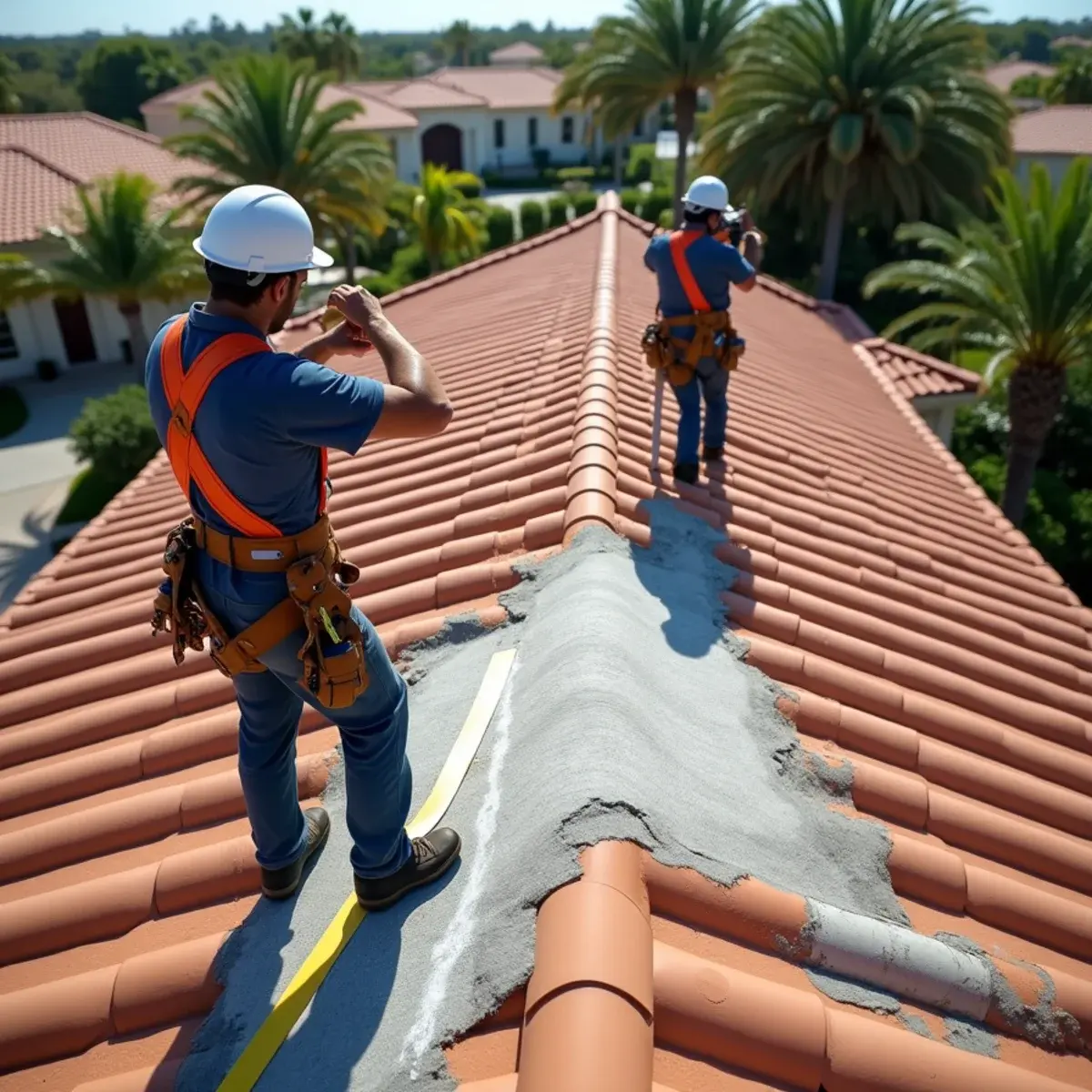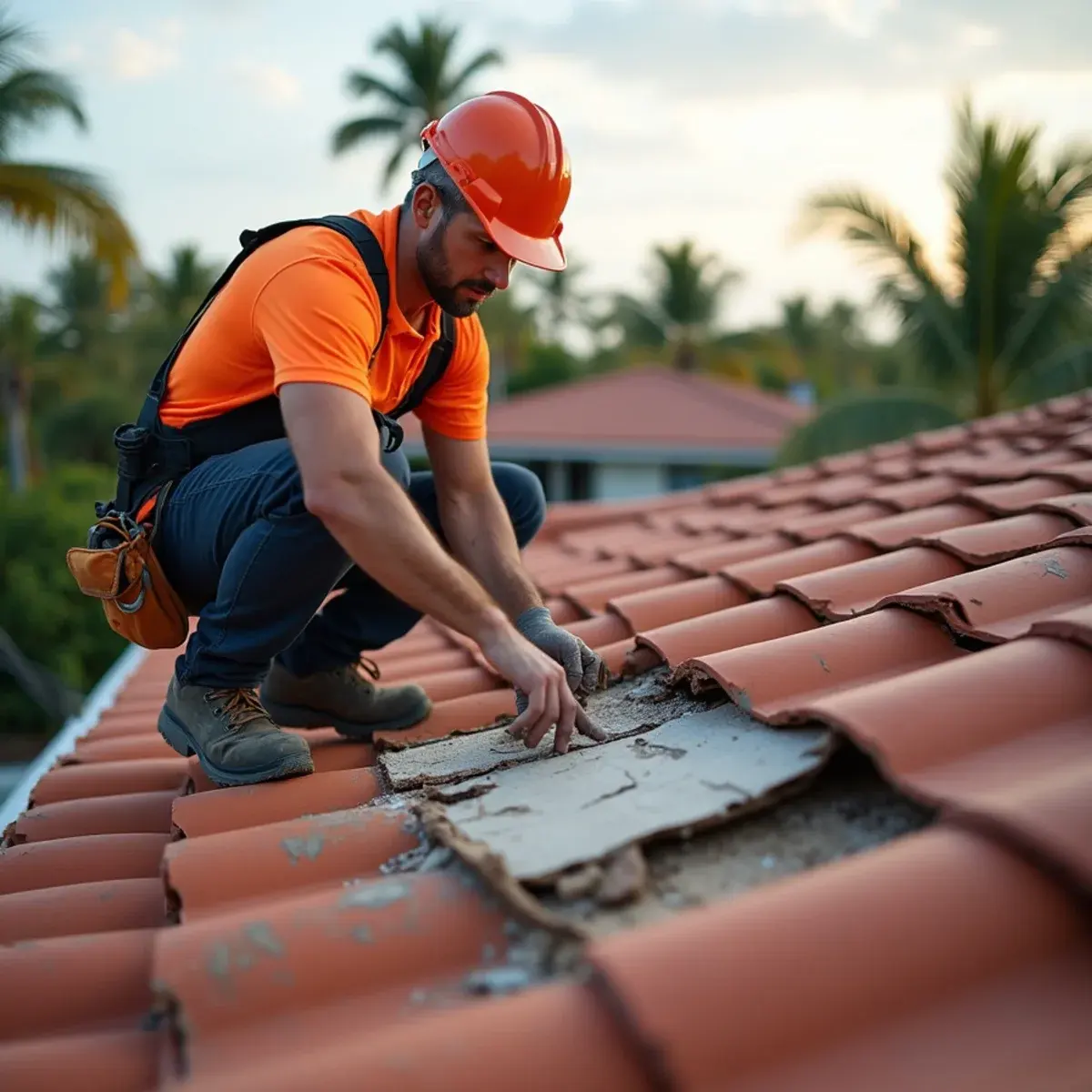
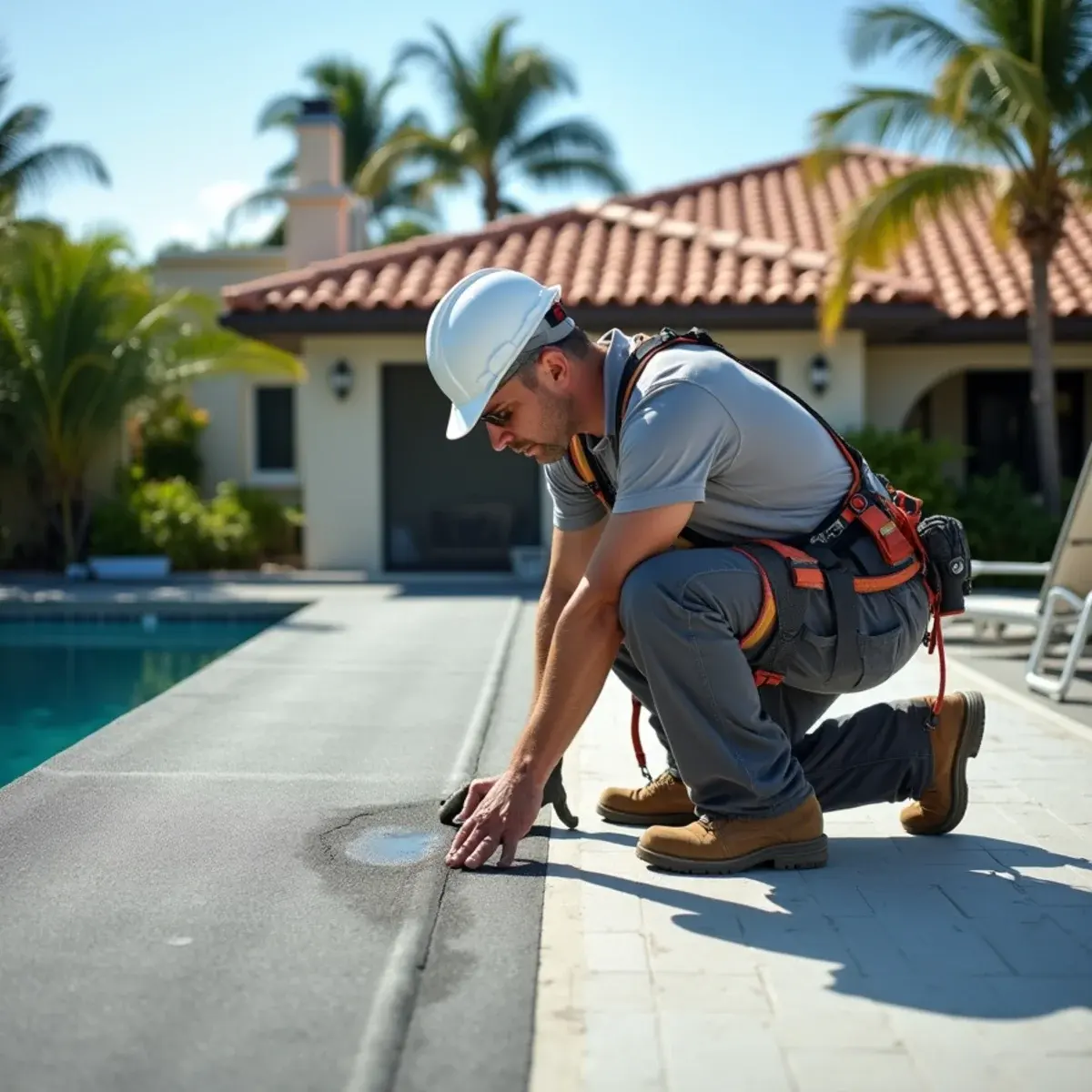
Flat roof repair in Boca Raton fixes the low-slope sections most homes have over a patio, garage, Florida room or addition, plus the flat condo and commercial roofs along A1A. The usual problems are ponding water, blistered or cracked membrane, open seams and worn flashing, and the cure ranges from a seam repair to a coating to a new membrane. Boca Tile Roof Repair answers 24/7 and sends a local roofer who finds the cause and prices the fix in writing. Every roofer we send is licensed and insured in Florida.
Flat sections often wear out years before the tile around them, so this is frequently the first roof job a Boca Raton owner faces.
Flat Roof Problems: Ponding, Blisters, Open Seams and Cracked Flashing
A flat roof gives warning signs long before it gives out, and catching them early keeps it a repair.
Ponding water
Water that sits for days ages the membrane faster, adds weight and points to low spots or blocked drainage. A common rule of thumb is that water still standing 48 hours after rain is a problem worth fixing.
Blisters and alligatoring
Blisters are bubbles where moisture or air is trapped between layers. Small, unbroken ones are often watched rather than cut. Alligatoring, a cracked, scaly surface, means the asphalt has dried out under the sun.
Open seams and laps
Where rolls of membrane overlap, the lap can lift with heat and movement. An open lap lets water under the membrane, where it travels before showing up as a ceiling stain.
Cracked flashing
Walls, parapets, pipes and AC stands each need flashing. Cracked stucco above it and dried sealant at pipes are common failure points.
A stain inside is only the symptom. The roofer we send traces it back to which of these causes it.
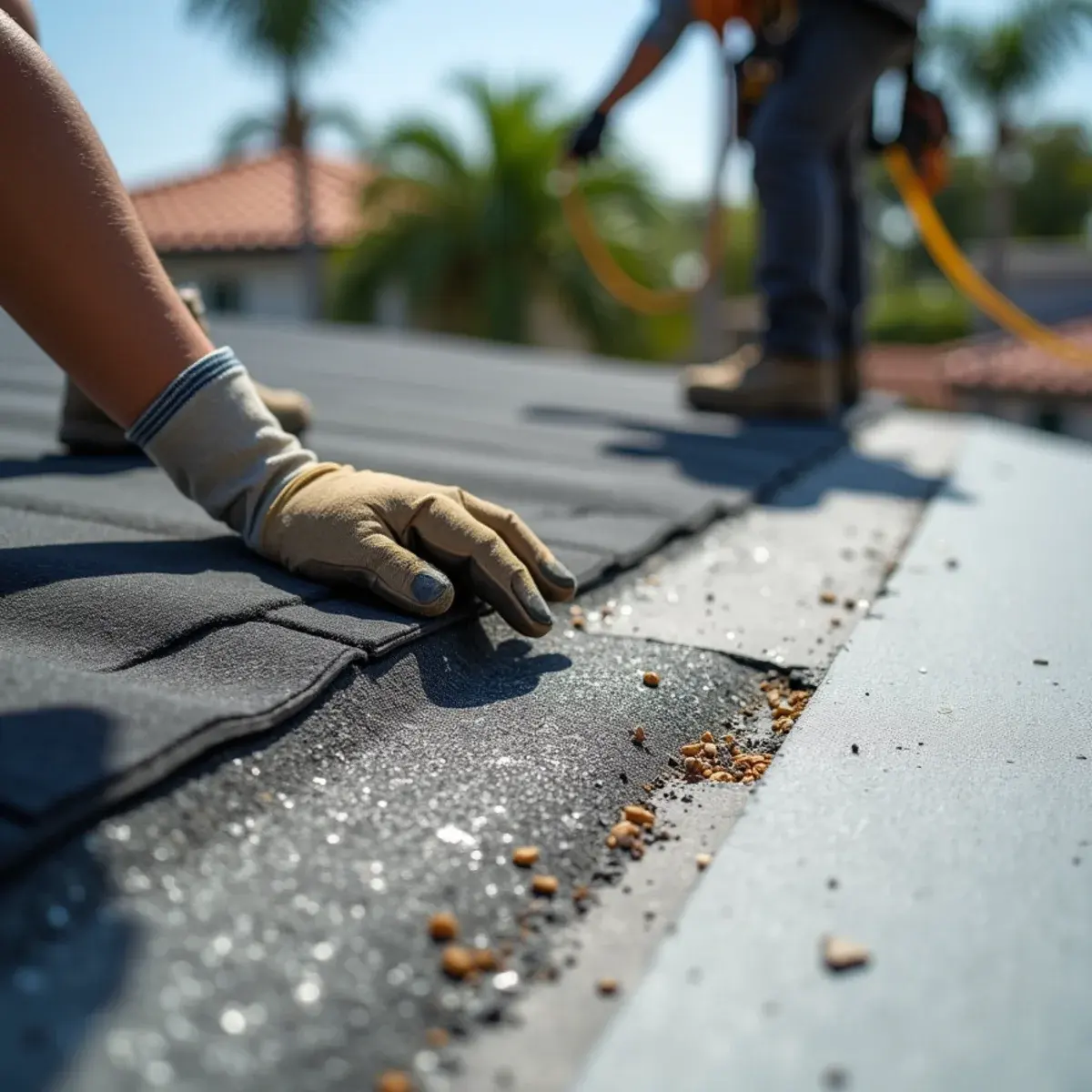
Flat Roof Types on Boca Raton Homes: Modified Bitumen, Built-Up and TPO
Three systems cover most low-slope roofs here, and each is repaired differently.
| Modified bitumen | Built-up (BUR) | TPO | |
|---|---|---|---|
| What it is | Polymer-modified asphalt rolls, usually a base sheet and a granulated cap | Layers of felt and hot asphalt, often with gravel | Single-ply white thermoplastic sheet |
| Seams | Torched, self-adhered or cold-applied laps | Many plies mopped together | Heat-welded |
| Where you see it | Most residential flat sections | Older homes and commercial buildings | Condos, commercial, some newer homes |
| Typical repairs | Seam and patch work, cap sheet sections, recoating | Patching, gravel and flood-coat work, often replaced with mod bit | Welded patches, seam re-welds |
Modified bitumen roof repair
Modified bitumen is the most common residential flat roof in Boca Raton. Splits and lifted laps are patched with matching material.
Built-up roof
A built-up roof is heavy and long-lived, but leaks are hard to trace through the plies. Many get replaced with modified bitumen when they wear out.
TPO roof repair
TPO seams are welded with hot air, so a good repair is welded too. Its white surface reflects sun, which helps on condo roofs.
Less common systems
You may also find EPDM (a black rubber single-ply, glued or taped at the seams), PVC (a welded single-ply similar to TPO), sprayed polyurethane foam with a protective coating, or an old coal-tar pitch roof on some commercial buildings. Each needs compatible repair materials: asphalt-based patching on a rubber or PVC roof, for example, does not bond and can damage it. Ask the roofer to identify the system before anything is applied.
Where the Flat Roof Meets the Tile Roof: The Tie-In That Wears Out First
On a typical Boca Raton home, the weakest spot is where the patio or garage flat roof meets the pitched tile roof. All the rain from that tile slope crosses this joint.
How a correct tie-in works
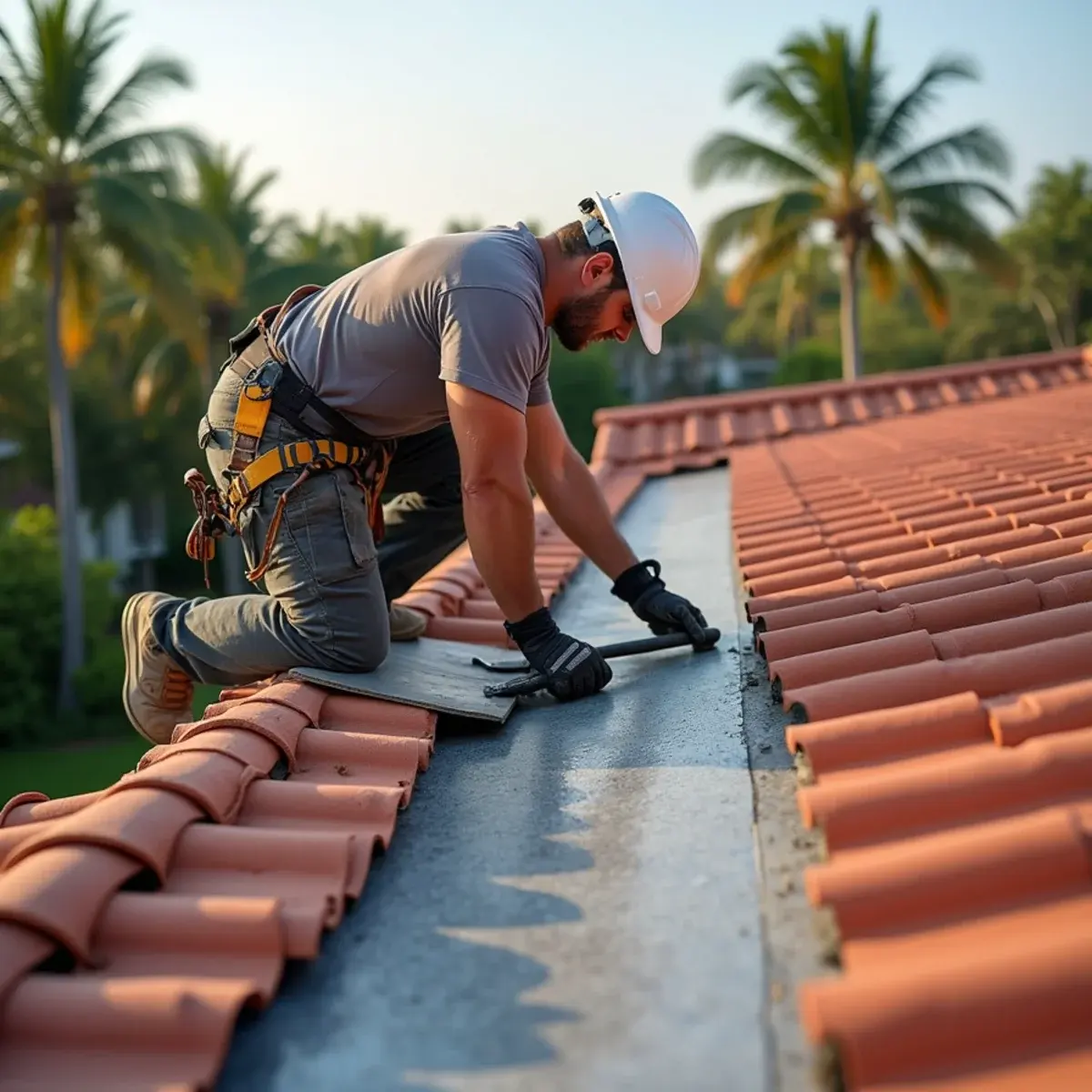
The flat roof membrane should run well up the tile slope, under the tile underlayment, so water flowing down always laps over it. The bottom courses of tile then sit on top. When that order is reversed, or the lap is too short, water gets behind the membrane.
Why it fails
- The tie-in was built with a short lap or with sealant instead of proper layering.
- The flat section was redone without lifting the tile, so the new membrane only butts up to the old one.
Doing it right means lifting tile
A real tie-in repair removes the lowest rows of tile, rebuilds the layers, and resets the tile. That is why it pairs well with tile roof underlayment replacement, since the tile is coming up anyway. Our article on how long tile underlayment lasts explains why both often wear out together.
Drains, Scuppers and Slope: Fixing Ponding Water
Ponding water is a drainage problem first. Patching the membrane without fixing the water path brings it back.
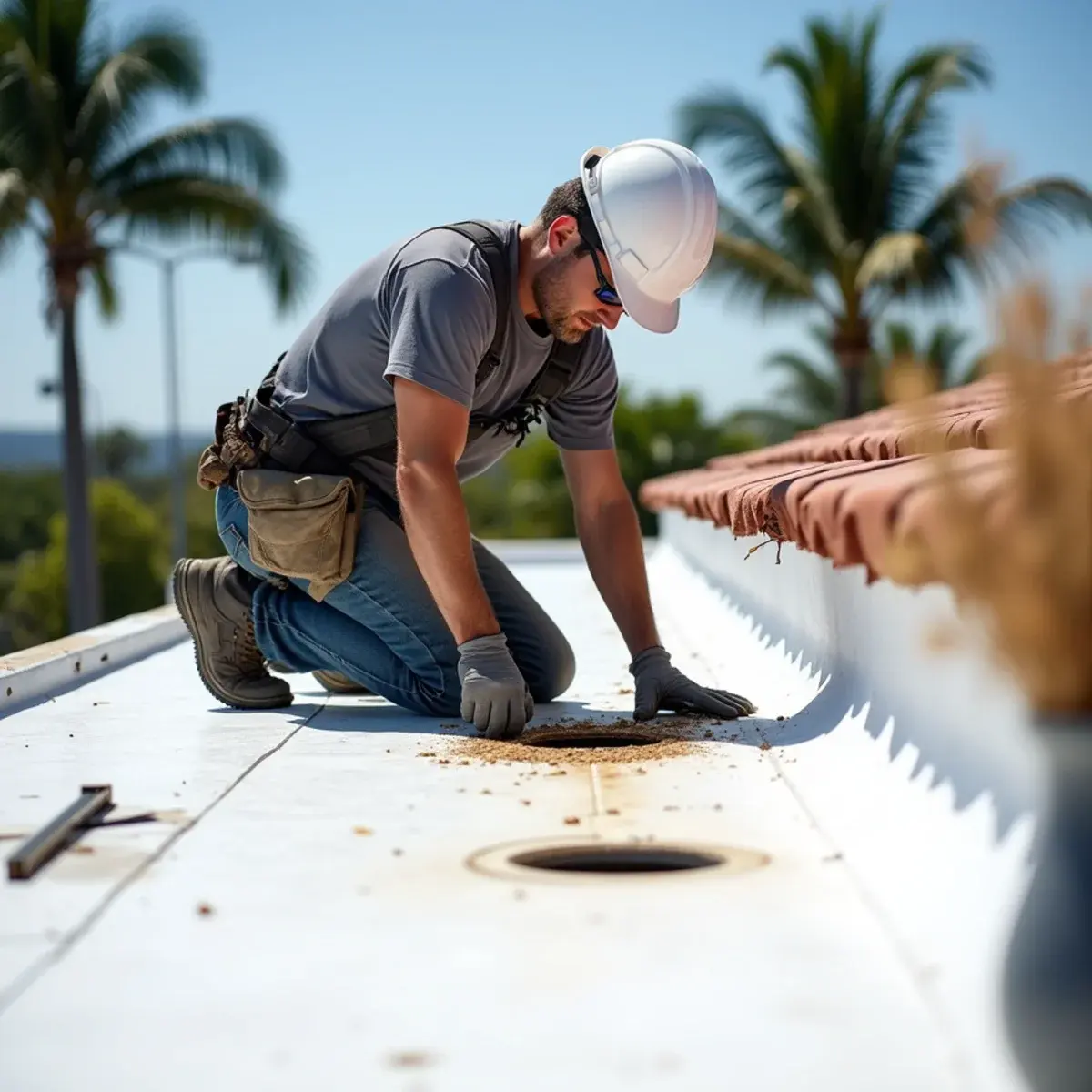
Clear and resize the outlets
- Scuppers are openings through the parapet, often with a collector box and downspout. Palm fronds and leaves clog them fast.
- Drains sit in the roof field with a strainer. They need to be at the low point and kept clear.
- Overflow scuppers give water a second way out when the main drain is blocked.
Add slope where there is none
New low-slope roofs are generally designed with at least a quarter inch of slope per foot, but older patio roofs in Boca Raton were often built nearly dead flat. A roofer can add slope with tapered insulation, build crickets to steer water around curbs and AC stands, or add a new scupper at the real low point.
Check the deck
A sagging deck holds water no matter what membrane is on it. If the wood under a pond has softened, it needs replacing before new roofing goes on.
Repair, Recoat or Replace: How to Decide
The right fix depends on how much of the roof is still sound.
Repair
Isolated problems on an otherwise healthy roof, such as an open lap, a split around a pipe or one failed flashing, are good repair candidates.
Flat roof coating
A flat roof coating, usually acrylic or silicone, renews a weathered but dry roof and reflects heat. Silicone generally handles ponding better than acrylic. A coating is not a fix for wet insulation, widespread blisters or failed seams, which must be repaired first.
Flat roof replacement
Replace when the membrane is brittle across the field, water has soaked the insulation or deck, or repairs keep stacking up. Replacement is also the time to fix slope and drainage for good.
The code side
A flat roof is usually its own roof section under the code, because the roof type changes where it meets the tile. That matters for Florida's 25% rule: on a small patio or garage roof, a modest repair can pass a quarter of the section quickly. If the flat roof was permitted under the 2007 Florida Building Code or later (on or after March 1, 2009), state law since 2022 lets only the repaired part be brought to current code; an older flat section can still be pushed to full replacement. The permit record settles it, and our guide to the 25% rule shows how sections are counted.
What a Flat Roof Repair Visit Includes, Step by Step
A flat roof leak in Boca Raton is often one bad seam or one tired joint, but finding it takes method. A typical repair on a patio or garage flat roof runs like this:
- Ask and look. The roofer starts with where the stain or drip appears inside, when it happens (every rain or only in sideways wind) and what has been patched before.
- Walk the surface. They check the membrane for blisters, splits and soft spots, the laps and seams, every drain and scupper, the edge metal and the wall or parapet flashing.
- Check the tie-in. Where the flat roof meets the tile roof or a wall, the bottom courses of tile may be lifted to see the base flashing and underlayment that run under them.
- Probe for wet areas. Soft spots and moisture readings show whether water is trapped in the insulation or deck, which decides between a patch and a section replacement.
- Write the scope. You get photos and a written price: what will be repaired, with which compatible material, what is excluded, and what the roofer would watch over the next year.
- Repair with matching material. Modified bitumen gets modified bitumen, TPO gets a welded TPO patch, and flashing is rebuilt rather than smeared with roof cement.
- Test and show you. Drains are cleared, the area is checked with water where it is safe to do so, and you get photos of the finished work.
How long a repair lasts
A well-made repair on a sound membrane can last as long as the roof around it. A patch on a roof that is brittle across the field buys time, not years, and the roofer should say which one you are getting.
Repairs in the rainy season
Flat roof repairs are done year-round here. From June to September, crews plan around afternoon storms: they open only what they can close the same day and work early. A small leak is better fixed in August than left until the dry season.
Flat Roofs Over Patios, Florida Rooms and Garages
Most flat roofs on Boca Raton houses are small patio roofs, Florida rooms and garage or addition roofs. They tend to have the same weak spots.
Patio roof and Florida room additions
Many were added years after the house was built, so they hang off a ledger board with flashing that was never tied into the main roof properly. They are often built with very little slope, which leads to ponding at the house wall.
Screen enclosures and equipment
Pool cages and screen enclosures are often fastened at the roof edge, and every fastener is a penetration. AC condensers, condensate lines and plumbing vents on flat sections add more flashing points to maintain.
Garages and additions
Garage roofs often take the main roof's downspout, so they see concentrated water.
Doing the flat section with the main roof
When the main roof is due, redoing the flat section at the same time costs less than two jobs and gives a clean tie-in. That applies to a tile roof replacement or a switch to metal, where our metal roof repair page covers what changes.
Condo and Small Commercial Flat Roofs
Along A1A and through east Boca Raton, condo buildings and small commercial properties rely on flat roofs over every unit below. Roof work there runs through a board or property manager, not a single owner.
What is different on a condo roof
- Approval. The association decides scope and contractor, often with an engineer's specification.
- Paperwork. Expect requests for license, insurance certificates and a written scope.
- Access. Taller buildings may need a crane, hoist or roof hatch access, and work hours that suit residents.
- Wind exposure. Height and an ocean-facing location raise design wind pressures at roof edges and corners.
- Equipment. Rooftop AC units, vents and antennas each need flashing.
Across the county line
Boca Raton is outside the High-Velocity Hurricane Zone, so Florida Product Approval and the Florida Building Code apply here. In Deerfield Beach condo communities and other Broward cities, membranes need a Miami-Dade NOA or HVHZ-approved Florida Product Approval, and inspections are stricter. Our service areas page lists every city we cover.
What Affects Flat Roof Repair Cost
The cause sets the scope, so these are the factors a roofer weighs.
- Size and number of sections. One patio roof costs less than a patio, garage and addition together.
- Membrane type. Modified bitumen, built-up and TPO each need their own materials and tools.
- Condition below. Wet insulation or soft decking adds tear-out and replacement.
- Drainage work. New scuppers, drains, crickets or tapered insulation add material and labor.
- The tile tie-in. Lifting and resetting tile at the transition adds time.
- Flashing details. Walls, parapets, curbs, pipes and AC stands each add work.
- Access and height. Two-story or condo roofs may need lifts or cranes.
- Permits. Larger repairs and replacements need a city permit.
- Disposal. Built-up roofs with gravel are heavy to remove.
The roofer we send gives you a written price before any work starts. Homes in Delray Beach and Parkland carry the same patio and garage flat sections, so the same factors apply there. If the whole house is due, our roof replacement page compares every material.
Why Homeowners Call Us for Flat Roof Repair
Flat sections are the part of a Boca Raton home that many tile roofers price as an afterthought. We send roofers who treat them as the first place to look.
- The tie-in is checked, not just the patch. Most leaks at a patio or Florida room come from the joint with the tile roof or the wall, so that joint is part of every inspection.
- Repair comes before replacement. If a seam or a scupper is the problem, you hear that first, and a recoat or replacement is only recommended when the membrane itself is worn out.
- Every roofer we send is licensed and insured in Florida, and they pull the permit when the work calls for one, such as a section replacement or a new membrane.
- One crew can do the flat and the tile. If the tile roof is due too, the roof replacement and the flat section are scoped together so the tie-ins are new.
- You get a written price before work, and phones are answered 24/7.
Keep it from coming back
Have the flat sections checked about twice a year and after a season of heavy rain or dropped palm fronds. Keep drains and scuppers clear, and don't let screen enclosure or satellite installers fasten through the membrane without proper flashing.
Flat Roof Repair questions in Boca Raton
How long does a flat roof last in South Florida?
A flat roof in South Florida often lasts somewhere around 10 to 20 years, depending on the system, the slope and how well the drainage and flashing are kept up. Constant sun and summer rain are hard on low-slope roofs, and sections that pond water age fastest. Coatings and timely seam repairs can extend the life of a sound roof.
Is ponding water on a flat roof a problem?
Yes, if it lasts. A little water that dries within a day or two after rain is normal on many flat roofs, but water still standing about 48 hours later speeds up membrane wear, adds weight and can soften the deck. The fix is usually better drainage or added slope, not just a patch on the membrane.
Can a flat roof be coated instead of replaced?
Often, if the roof is dry and mostly sound. An acrylic or silicone coating can renew a weathered surface and reflect heat, and silicone handles ponding better. A coating will not fix wet insulation, soft decking or widespread blisters, so the roofer should check moisture and repair seams before recommending one.
Can a flat roof be repaired during the rainy season?
Yes. Flat roof repairs are done year-round in Boca Raton. In summer, crews start early and open only the area they can seal the same day, so afternoon storms don't catch an open roof. Waiting for the dry season usually lets a small leak wet the insulation and deck, which turns a patch into a section replacement.
How long does a flat roof repair last?
On a membrane that is otherwise sound, a properly made repair with matching material can last as long as the roof around it. On a roof that is brittle, blistered or wet across the field, a patch only buys time. The roofer should tell you in writing which situation you are in and what to watch for.
Does homeowners insurance cover flat roof repair?
That depends on your policy, the cause and the exclusions, and only your insurer can decide. Many policies treat sudden damage differently from wear and age. We don't interpret policies. Keep dated photos, the roofer's inspection notes and the itemized estimate together if you plan to ask your insurer.
How often should a flat roof be inspected?
About twice a year, and after a stretch of heavy rain or a storm that drops palm fronds and debris. Check that drains and scuppers are clear and look for standing water a day or two after rain. Flat sections that meet a tile roof deserve a look at that joint every time.
Should the flat section be redone at the same time as the tile roof?
Usually, yes. The flat roof and the tile roof meet at a tie-in that only works when both are layered correctly, and doing them together means the tile at the transition is lifted once. It also avoids paying for two setups, two permits and two cleanups. If the flat section is fairly new, the roofer may only rebuild the transition.
Where we arrange flat roof repair
Boca Raton and West Boca, plus nearby cities in Palm Beach County and the Broward High-Velocity Hurricane Zone. See all service areas.
Also serving Boynton Beach and Coconut Creek.