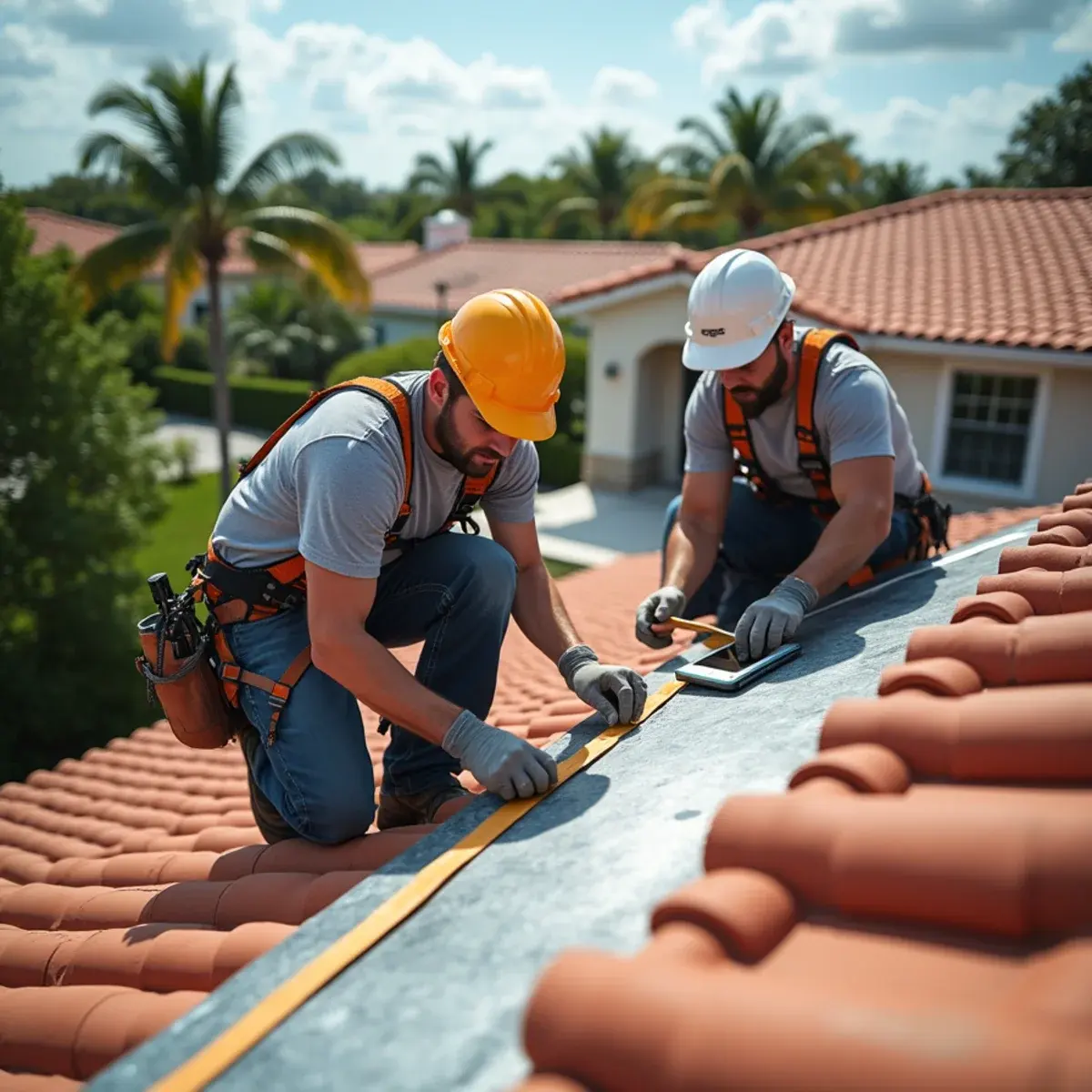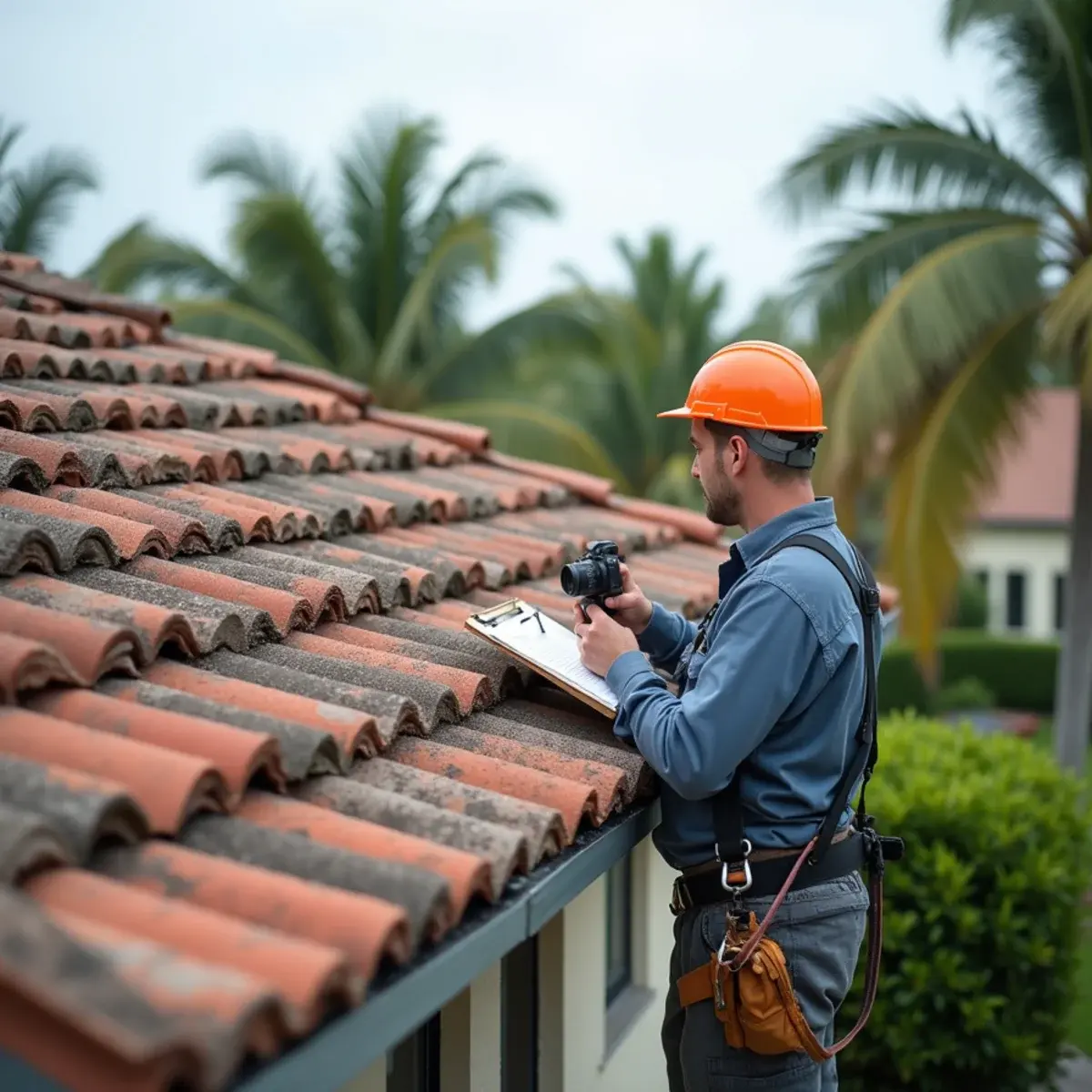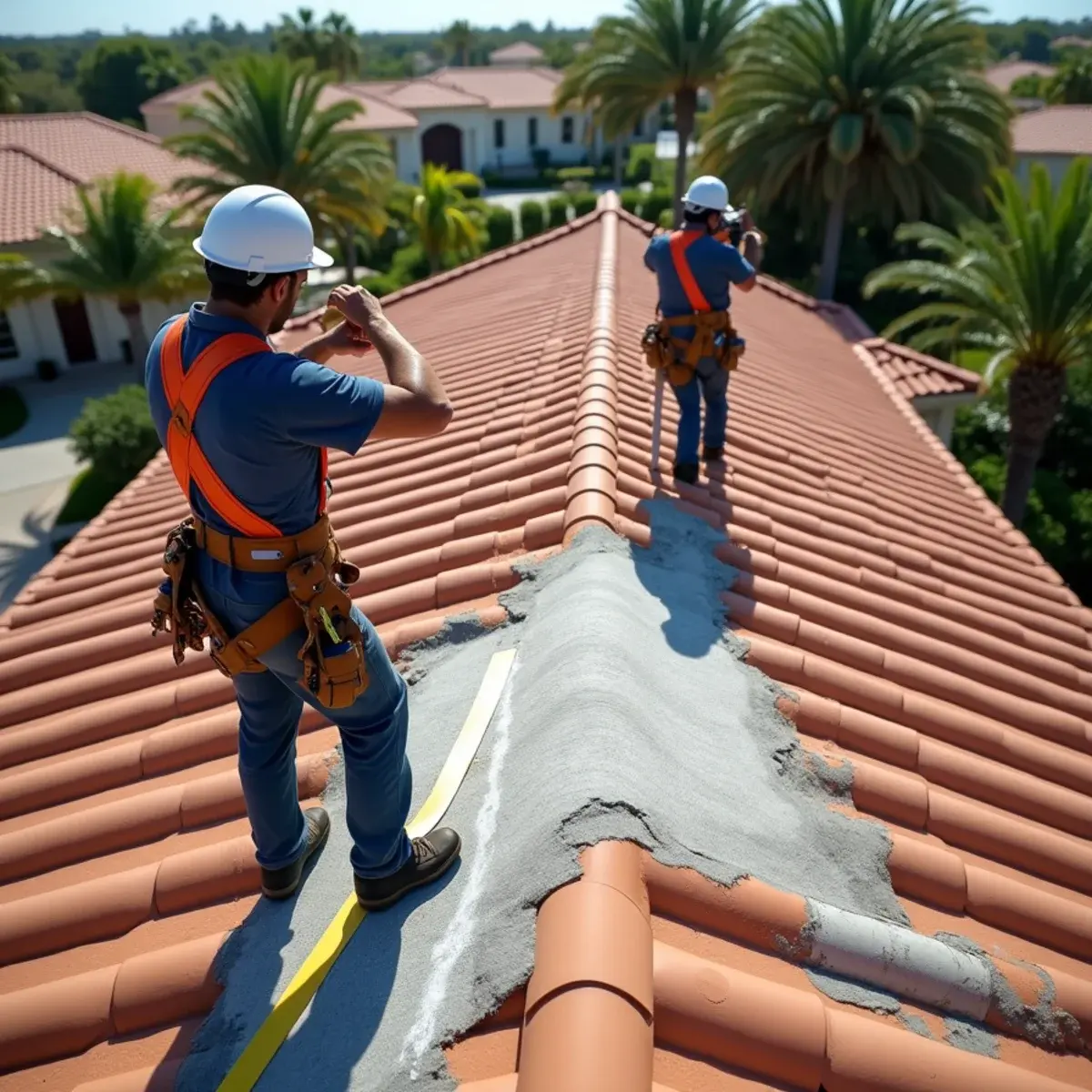
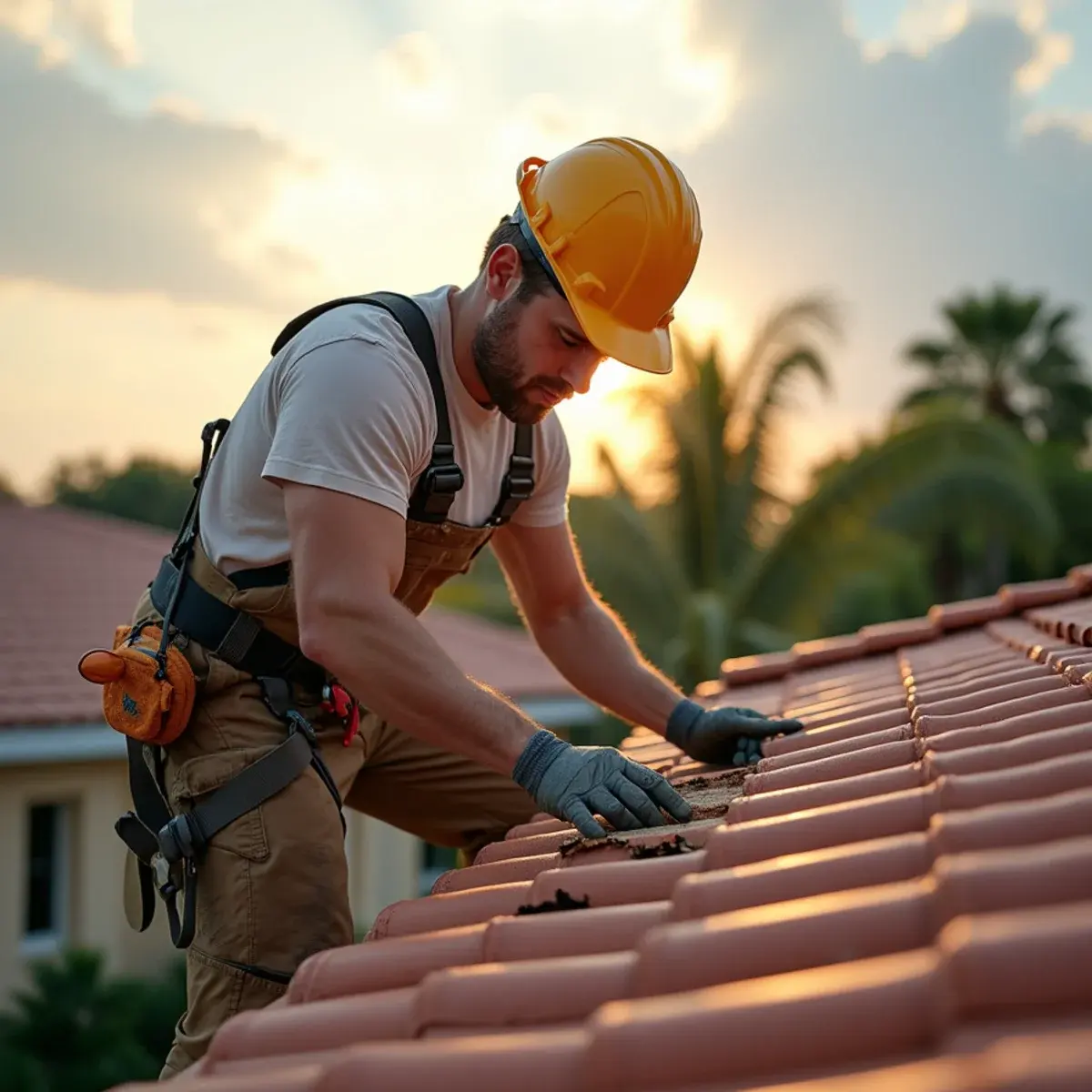
Tile roof underlayment in South Florida usually lasts 20 to 30 years, far less than the concrete or clay tile sitting on top of it. The tile sheds most of the rain and blocks most of the sun, but the underlayment beneath it is the real waterproof layer, and Boca Raton's heat, sunlight and long wet season wear it out on a schedule the tile never follows.
That is why a tile roof can look perfect from the street and still be close to the end of its working life. Below is what sets the clock, how the common systems compare, what failure looks like and what the usual fix involves.
Why Underlayment Wears Out Long Before the Tile
A concrete or clay tile is fired or cured to last for generations. The underlayment is an asphalt-based or polymer-modified sheet, and it ages the way any asphalt product does in the sun: the oils dry out, the sheet shrinks and stiffens, and eventually it cracks.
Heat that never lets up
Tile absorbs heat all day and passes it down to the layer below. In South Florida that happens for most of the year, not just a few summer months, so the underlayment spends decades in an oven. Heat is the main reason felt systems turn brittle.
Sunlight through the gaps
Tile is not a sealed surface. Sunlight reaches the underlayment through the open ends of barrel and S-tiles, at eaves and rakes, around cracked or slipped pieces, and at ridges and hips where mortar has fallen away. Each of those spots ages faster than the shaded field of the roof.
The wet season
From June to September, afternoon storms push water under the tile almost daily. Most of it drains off the underlayment, but some sits in low spots, behind debris and at the headlap of each course. Repeated wetting and drying is hard on any sheet, and on an older roof it finds every crack.
What the tile is set in
Older Boca Raton roofs often have tile set in mortar. Mortar holds moisture against the underlayment and can trap water behind it like a small dam. Newer roofs use foam adhesive, which bonds directly to the cap sheet, so the condition of that sheet decides whether the tile stays attached.
Felt Systems vs Self-Adhered Membranes
Most tile roofs in the area use one of two approaches. The age of the roof usually tells you which one you have.
| Hot-mopped felt system | Self-adhered membrane | |
|---|---|---|
| Typical makeup | A nailed base sheet (often 30 lb felt) with a heavier mineral-surfaced cap sheet (often 90 lb) set in hot asphalt | A polymer-modified sheet with a sticky back, applied to the deck or over a nailed base sheet |
| Where you see it | Many roofs from the 1980s through the 2000s | Common on newer reroofs and lift-and-relay jobs |
| How it ages | Asphalt dries out; felt turns brittle and cracks, starting at exposed edges | Bonds to the deck, so small punctures tend to stay local; still ages with heat and UV |
| What decides its life | Mopping quality, ventilation, tile attachment, exposure | Product, installation, deck condition, exposure |
A self-adhered membrane is not automatically better in every case. Installation and deck preparation matter as much as the product, and the life any manufacturer states depends on its own written terms. Your roofer can show you the product documentation for whatever system they propose.
Where synthetic underlayment fits
You will also see synthetic (woven polymer) underlayments on quotes. They are light, tear-resistant and widely used under shingles. Under Florida tile, a synthetic sheet typically appears as part of an approved tile system, for example as a base layer under a self-adhered cap, rather than as the only layer. Ask which product approval covers the whole system, not just the sheet.
Signs the Underlayment Is Reaching the End
Underlayment failure is gradual and mostly hidden, so the signs are indirect. Homeowners should not walk on tile to look for them; the tiles crack underfoot, and a trained roofer knows where to step.
- Stains far from any broken tile. Water that gets past a cracked sheet travels down the deck before it drips, so a ceiling stain often appears well away from any visible damage.
- Granules or crumbled debris at the eaves. Dark mineral granules or flakes of felt in gutters, at the eave closure or on the ground below the drip edge suggest the cap sheet is breaking down.
- Brittle felt visible at the edges. At rakes, eaves and around flashing you can sometimes see the edge of the underlayment. If it is curled, cracked or snaps when bent, the rest of the roof is usually not far behind.
- Soft spots in the deck. A roofer walking the roof may feel give between rafters. That points to long-term moisture reaching the plywood.
- Slipping tile. When the cap sheet weakens, mortar and foam lose their grip and tiles start to shift out of line.
One sign alone does not prove the whole roof is done. A roofer inspects the attic, lifts a few tiles in typical spots and checks how the sheet behaves before calling it.
The Post-Wilma Wave: Why So Many Roofs Are Due Now
Hurricanes Frances and Jeanne in 2004 and Wilma in 2005 led to a large wave of reroofing across Palm Beach and Broward counties. Many of those roofs, and the underlayment under them, are now about 20 years old. Irma in 2017 added more repairs, but much post-Wilma underlayment is still in place.
The same pattern shows up in neighboring cities. In Parkland, where tile roofs from the 1990s and 2000s are reaching underlayment age, whole streets were built within a few years of each other, so their roofs come due together. In Coconut Creek, where townhouse tile runs across several units under HOA rules, one owner's worn underlayment is often a sign that the neighbors' sheets are just as old. Both cities sit in Broward's High-Velocity Hurricane Zone, so replacement products need a Miami-Dade Notice of Acceptance or HVHZ-approved Florida Product Approval and the work goes through in-progress inspections.
Lift and Relay: The Usual Fix
When the tile is sound and only the underlayment has worn out, the standard repair is a lift and relay. The roofer removes the tile, replaces everything underneath and puts the original tile back. You can read more about how the job is planned on our tile roof underlayment replacement page.
- Tiles are lifted, sorted and stacked on the roof or on site.
- The old underlayment is torn off down to the deck.
- Damaged or soft decking is replaced and the deck is renailed to current requirements.
- New underlayment, flashing and edge metal are installed and inspected.
- The original tile goes back on, with matched replacements for any that broke.
A lift and relay is not always possible. Mortar-set tile often breaks during removal, older tile can be too brittle to handle twice, and discontinued profiles can leave too few spares. In those cases a full tile roof replacement may make more sense, and if you are weighing a change of material, our roof replacement page covers metal, shingle and flat options. Your roofer pulls the permit and arranges the inspections either way.
What Roofers Find When They Lift Tile on a 20-Year-Old Boca Raton Roof
Lifting a few tiles tells more than any amount of looking from the ground. These are the patterns a roofer sees most often on South Florida tile roofs around the 20-year mark.
Eaves and valleys go first
The felt at the lowest course of tile and along valleys is usually the most worn, because water runs over it the longest and debris holds moisture there. The middle of a slope can look surprisingly good on the same roof.
Mortar-set tile ages the felt beneath it
Where tiles were set in mortar, the mortar holds water against the underlayment after every rain. Felt under mortar-set sections is often more brittle than under foam-set or nailed tile on the same house.
Heat shows on the sunny slopes
South- and west-facing slopes bake hardest. Felt there tends to dry out and crack before the north side, so a roofer checks more than one slope before judging the whole roof.
The deck tells the history
Dark staining and soft spots on the plywood under the felt, or rusted nail heads, mean water has been getting through for a while, even if the ceiling inside is still clean.
What the tile itself tells you
Very little. Clean, intact concrete tile can sit over felt that crumbles in your hand. That is why a roof's age and a few test lifts matter more than how the roof looks from the street. The industry's installation reference for tile in Florida, the high-wind concrete and clay tile installation manual published by the Florida Roofing and Sheet Metal Contractors Association and the Tile Roofing Institute, is what a roofer follows when the underlayment is replaced.
Frequently asked questions
Can the underlayment be replaced in just one part of the roof?
Sometimes. Valleys, eaves and low-slope areas often wear first, and a roofer can lift tile and replace underlayment in those sections only. That makes sense when the rest of the sheet is still flexible. If the felt is brittle across the whole roof, a section repair tends to buy only a short time before the next area fails.
Does a self-adhered membrane last longer than hot-mopped felt?
It can, but the answer depends on the product, the installation and how much heat and sunlight reach it. Many roofers prefer self-adhered membranes for reroofs because they bond to the deck and keep small punctures local. Any lifespan or coverage a manufacturer offers is set by its own written terms, so ask your roofer for the documents on the product they propose.
Can a tile roof leak when no tiles are broken?
Yes. The tile is only the outer shield. When the underlayment underneath dries out and cracks, wind-driven rain that gets past the tile laps, which happens on every tile roof, reaches the deck. That is why a 20-year-old tile roof can leak with every tile intact, and why a roofer lifts tiles to check.
How can I find out how old my underlayment is?
Start with the permit history for your address. A reroof or lift and relay should have a permit with a final inspection date, which tells you when the current underlayment went on. If there is no reroof permit, the underlayment is probably original to the house. Your HOA may also keep records of past roof work in the community.
The bottom line
Tile roof underlayment in South Florida gives most homes 20 to 30 years, and many roofs from the post-Wilma years are now in that window. If your roof is in that age range or showing the signs above, a roofer can check the sheet and tell you whether a section repair, a lift and relay or a new roof is the right call. Call Boca Tile Roof Repair at (773) 207-0769 and we will set up a visit from a local roofer.