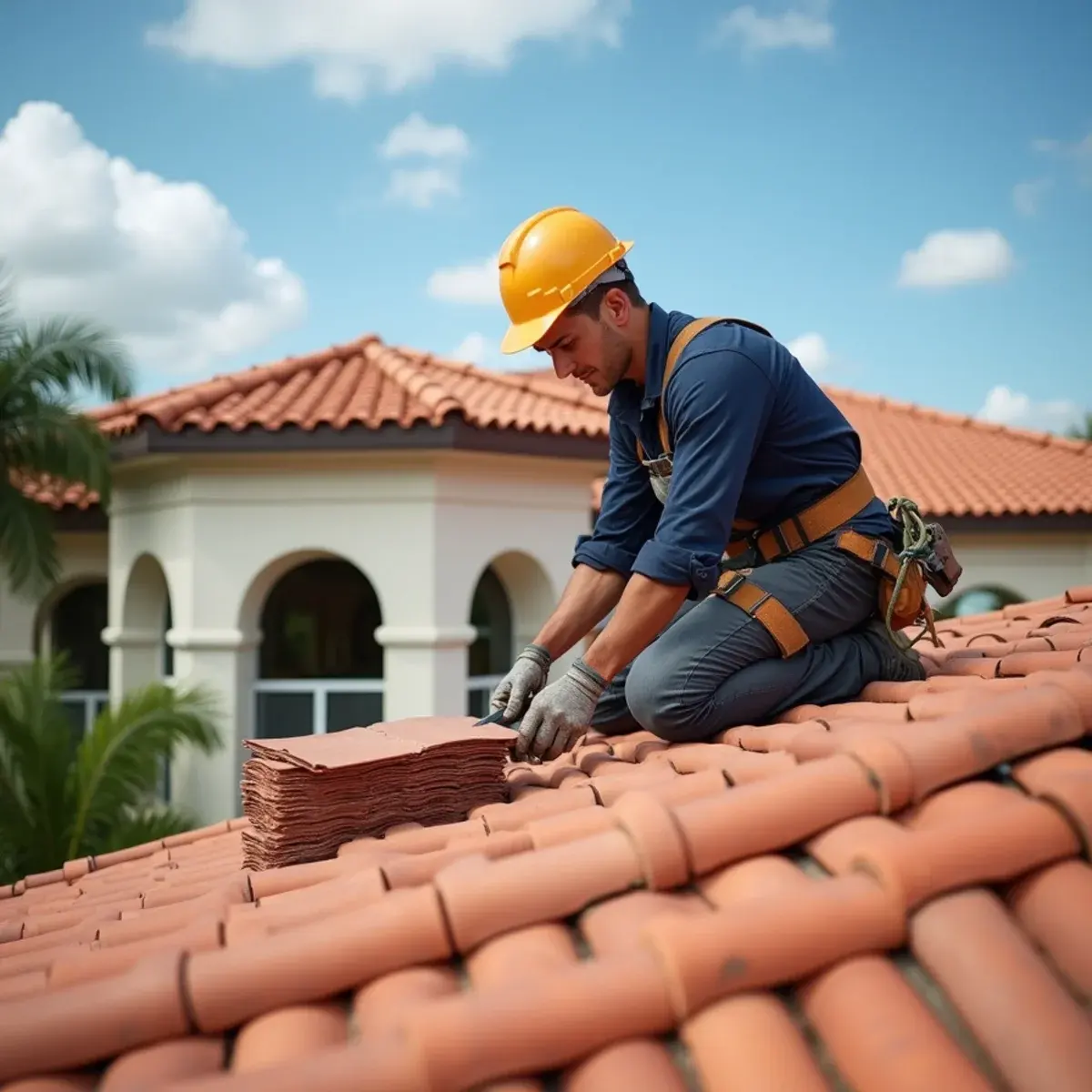
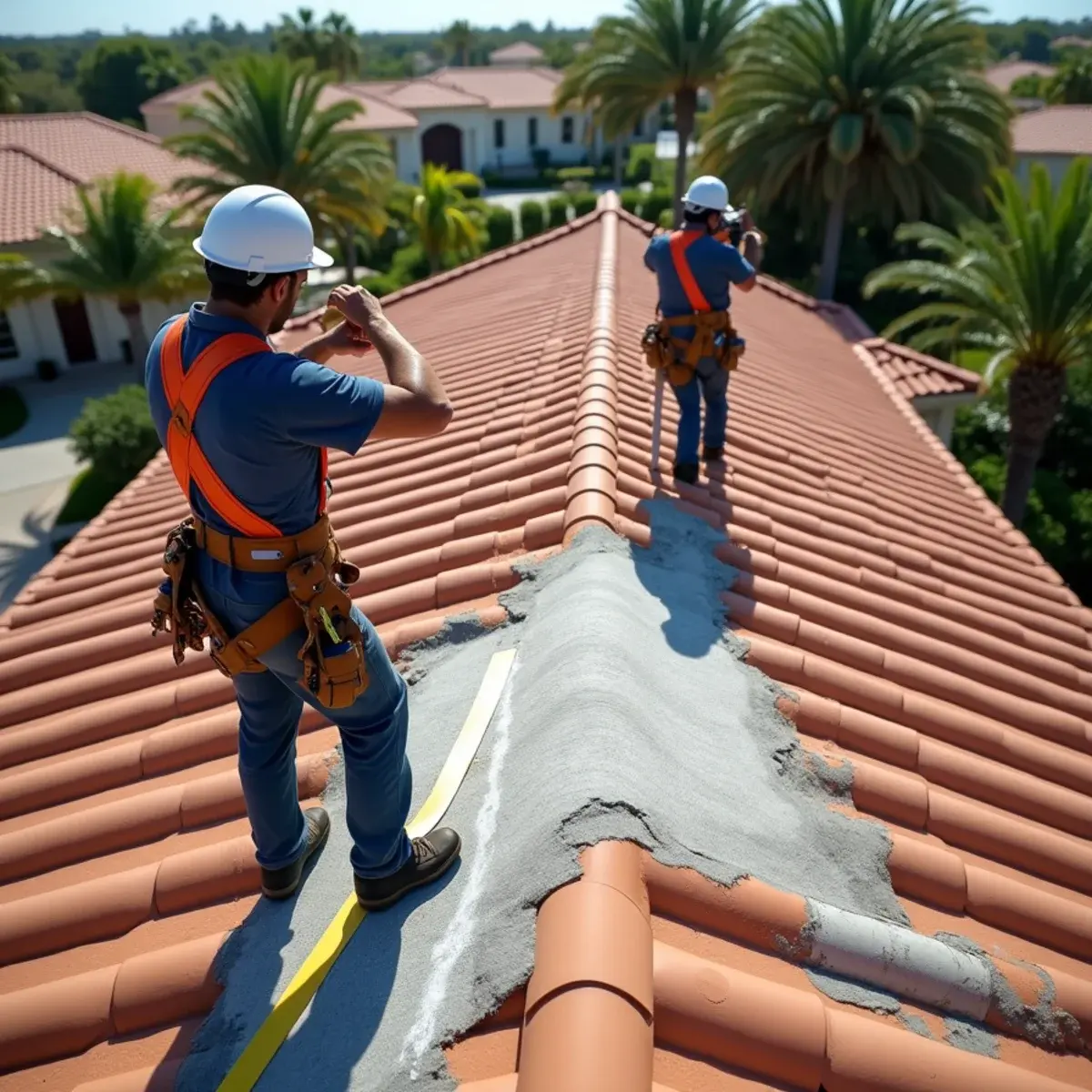
Tile roof repair in Boca Raton usually comes down to three things: replacing broken or slipped tiles, re-securing ridge and hip caps, and checking the underlayment beneath the tile, which does the real waterproofing. Call us and we send a licensed, insured local roofer who looks under the tile, shows you what was found, and gives you a written price before any work starts.
Most Boca Raton tile roofs don't need to be replaced when a few tiles crack. The tile itself often lasts for decades. What the roofer needs to tell you is whether the layers underneath still have years left, and that answer decides between a small repair, a section repair or a tile underlayment replacement.
By Boca Tile Roof Repair · Updated
Leak checklist
Tile roof leaking right now? The first 30 minutes
Water coming through the ceiling under a tile roof usually means wind-driven rain has found a cracked or slipped tile, a worn valley or a tired patch of underlayment. The first half hour is about protecting the inside of the house and keeping a record. Nobody needs to climb onto the roof.
Move things out of the way. Furniture, electronics, rugs and artwork come away from the drip first.
Catch the water. Put a bucket or container under the leak and use towels to stop it spreading, without creating a slip hazard.
Stay safe around electricity. Switch off power to a wet room only if you can reach the panel safely. Never touch outlets or equipment while standing in water.
Stay off the roof. Wet tile is slippery and cracked tile breaks underfoot. One unplanned walk can turn a single broken tile into a dozen.
Take photos before cleanup. Ceiling stains, wet walls, any tiles on the ground and the roof as seen from the yard or a window. Keep the original files with their dates and times.
Write down the basics. When the drip started, which rooms are affected, and the weather at the time.
Call us. We take the details, ask about the roof type and age, and send a local roofer to find where the water is getting in.
Start drying within 24 to 48 hours
EPA guidance is to dry water-damaged materials within 24 to 48 hours to reduce the chance of mold. A drip that has stopped does not mean the ceiling or insulation is dry, so keep the area ventilated and ask whether anything needs professional drying.
Keep the records together
Photos, the roofer's inspection notes and written estimate, receipts and any notes from calls belong in one folder. If you contact your insurer, those records help, but your policy and your insurer decide coverage. The roofer documents the condition of the roof and what it needs; they do not interpret policies.
Roofing services
Tile, flat and metal roof services around Boca Raton
When a Boca Raton roof is past repair, the roofer we send prices a full replacement in concrete tile, clay tile, metal, shingle or flat membrane. The job covers tear-off, deck renailing, a sealed secondary water barrier, the permit and inspections, HOA paperwork and the records your wind mitigation inspector will ask for.
Tile outlasts the underlayment beneath it. In a lift and relay, the roofer we send removes and stacks your Boca Raton tiles, replaces the worn underlayment and flashings, seals and renails the deck, and sets the same tiles back, replacing any broken ones with matching spares. It keeps your roof's look and HOA approval.
When the tile and the underlayment are both worn out, a full tile re-roof is the lasting fix. We send a licensed Boca Raton roofer who explains concrete versus clay, barrel versus S-tile or flat profiles, HOA approval and the permit, then gives you a written price before any work starts.
Almost every Boca Raton home has a flat section over a patio, garage or addition, and it usually wears out before the tile. We send a licensed roofer to fix ponding, blisters, open seams and the flat-to-tile tie-in on modified bitumen, built-up and TPO roofs, or to replace the section when patching no longer makes sense.
Metal roofs are a growing choice in Boca Raton, and they need different repairs than tile. We send a licensed roofer to replace backed-out screws and worn washers, reseal laps and trim, treat salt-air rust, and fix standing seam and 5V crimp panels, or to plan a metal roof installation when repair no longer makes sense.
Metal Roof Repair in Boca Raton
Not sure which one you need?
Describe what you are seeing and a roofer will tell you after looking under the tile.
Tile roofs in Boca Raton: what local roofers see every week
Boca Raton was incorporated in 1925 around Addison Mizner's Mediterranean Revival vision, and the city still looks the part. That history shapes almost every tile roof repair here.
Clay tile on the older east side, concrete tile almost everywhere else
Old Floresta and the older streets east of Federal Highway carry clay barrel tile, often the traditional two-piece kind set in mortar. Clay keeps its color for generations, but older pieces turn brittle and break underfoot, so a careful roofer moves slowly and replaces like with like. From the 1960s through the 1990s, the subdivisions and country-club communities (Royal Palm Yacht & Country Club, Woodfield, St. Andrews, Boca Bath & Tennis, Camino Gardens and many more) went up with concrete tile: barrel, S-tile and flat profiles in colors set by the community.
The underlayment ages first
In South Florida heat, the underlayment under the tile usually lasts 20 to 30 years, while concrete and clay tile can last far longer. Roofs from the wave of work after Hurricane Wilma in 2005 are now about 20 years old, so many Boca Raton homes are reaching the point where cracked tiles are the symptom, not the cause.
Ridge and hip mortar, valley metal and salt air
Mortar at the ridges and hips shrinks and cracks with years of sun and the June to September wet season. Valley metal takes the most water on any roof, and within a few miles of the ocean salt air speeds up corrosion of older metal valleys and flashing.
HOA matching is the default
Most Boca Raton associations fix the tile profile and color. A repair that doesn't match can draw a violation letter, so matching (or blending salvaged tile from a hidden slope) is part of every job, not an afterthought. Many homes also have a flat section over a patio, garage or addition; see flat roof repair for where it meets the tile.
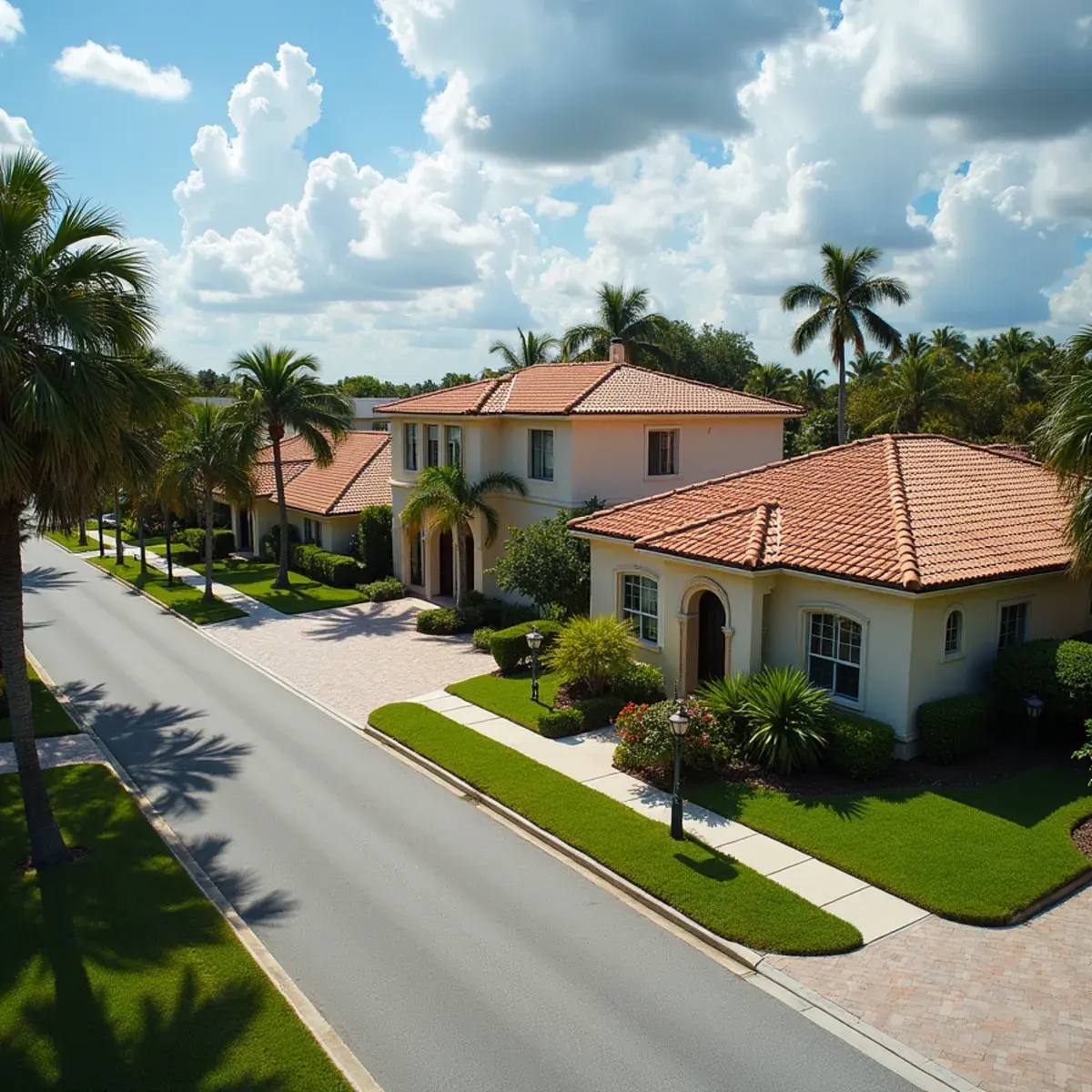
Clay barrel tile and concrete S-tile roofs on neighboring homes in a Boca Raton neighborhood
Broken, cracked and slipped roof tiles
A cracked or slipped tile lets sun and wind-driven rain reach the underlayment directly. One broken tile is a small job, but the roofer should always look at the tiles around it and the surface beneath before calling it done.
Tiles crack from impact (branches, dropped tools), age, years of heating and cooling, wind that lifts loose pieces, and foot traffic. That small crack matters because the underlayment below was never meant to sit in direct sun and rain. Water that gets past one tile can run along the underlayment, a batten or a valley for several feet before it shows up as a stain.
Cracked tile: usually from foot traffic, a falling branch, or a tile that was walked on during other work (solar, satellite, gutter or AC installs). Check the tiles beside it for hairline cracks.
Missing tile: the underlayment is fully exposed. The roofer checks it for sun damage and moisture, and looks at the neighboring tiles, which often lose their hold too.
Slipped or displaced tile: the adhesive foam, mortar or fastener has let go. If several tiles have moved, the attachment system may be failing across a whole slope.
Broken ridge or hip tile: often loose mortar underneath. See the next section.
Mismatched replacement from an earlier repair: worth correcting if your HOA asks, and a sign to check what was done underneath.
A good tile repair removes the damaged piece without breaking its neighbors, inspects the underlayment it was protecting, replaces the tile with a matching profile and color, and sets it with an approved method. If the underlayment is brittle or torn under several tiles, the conversation moves to a section repair or a lift and relay.
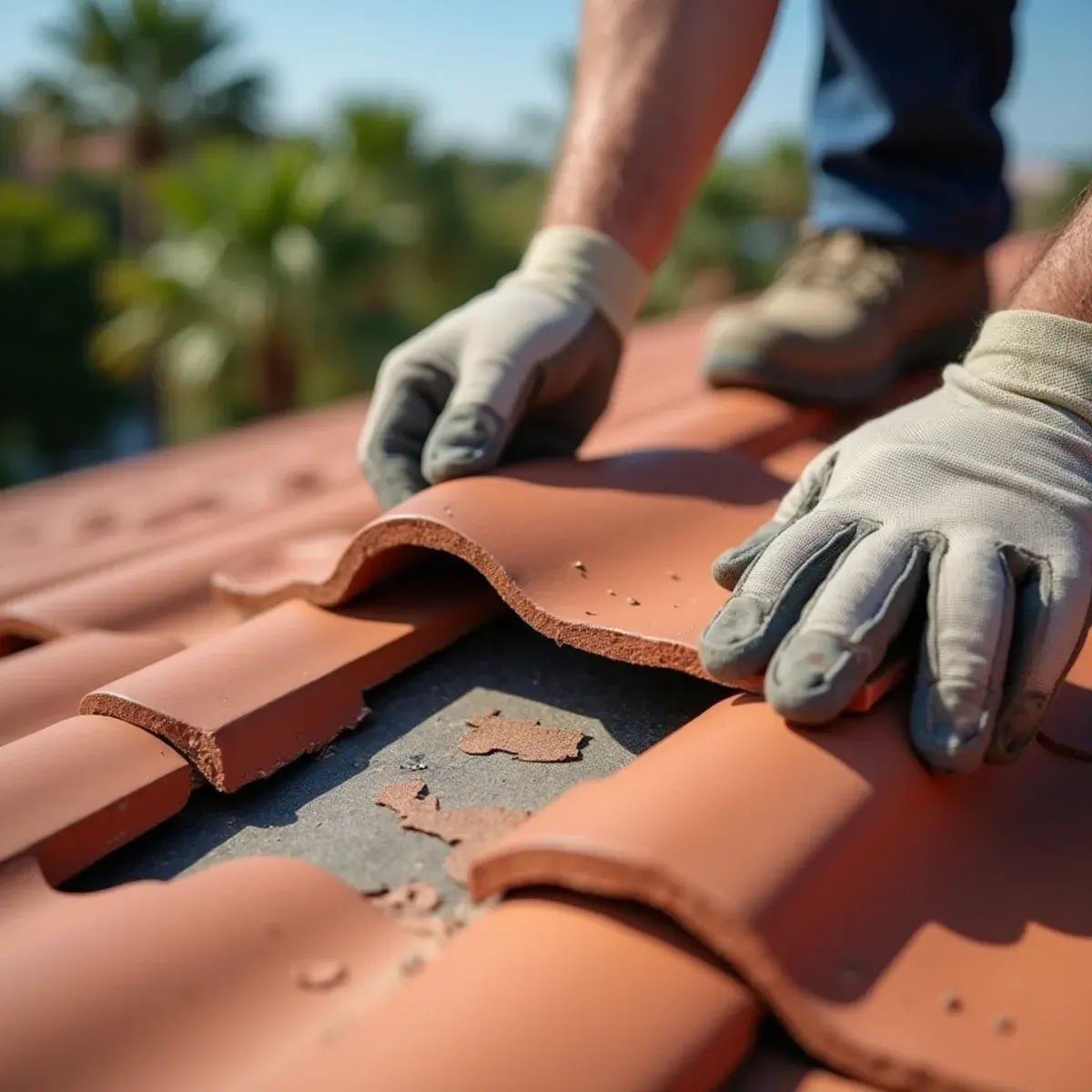
Roofer fitting a matching replacement concrete tile into a gap on a Boca Raton tile roof
Ridge cap and hip mortar repair
Ridge and hip tiles cap the joints where roof slopes meet. On many older Boca Raton roofs they sit on a bed of mortar, and that mortar shrinks, cracks and lets go after years of heat and rain. Loose caps rattle, slide or fall, and the joint underneath is left open.
What the repair involves
Remove loose ridge or hip tiles and the failed mortar.
Inspect the ridge board, the underlayment at the ridge and any ridge vent.
Reset the caps with a current, code-approved method (mortar, foam or a mechanically fastened ridge system, depending on the roof and its product approval).
Color-match any mortar that shows at the edges so the line looks uniform from the street.
Cracked mortar alone is not a reason for a new roof. It is one of the most common tile roof repairs in Boca Raton and usually one of the simplest.
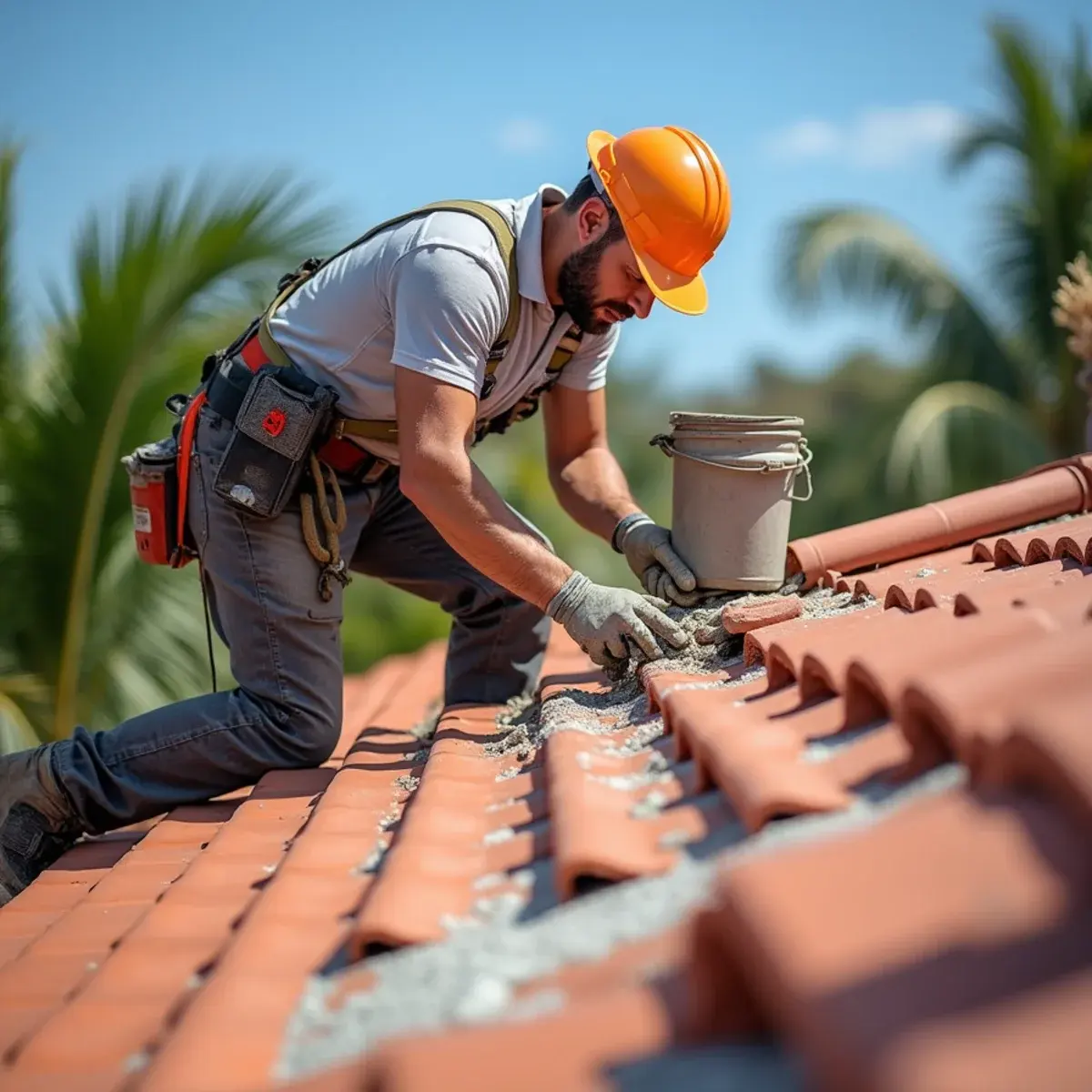
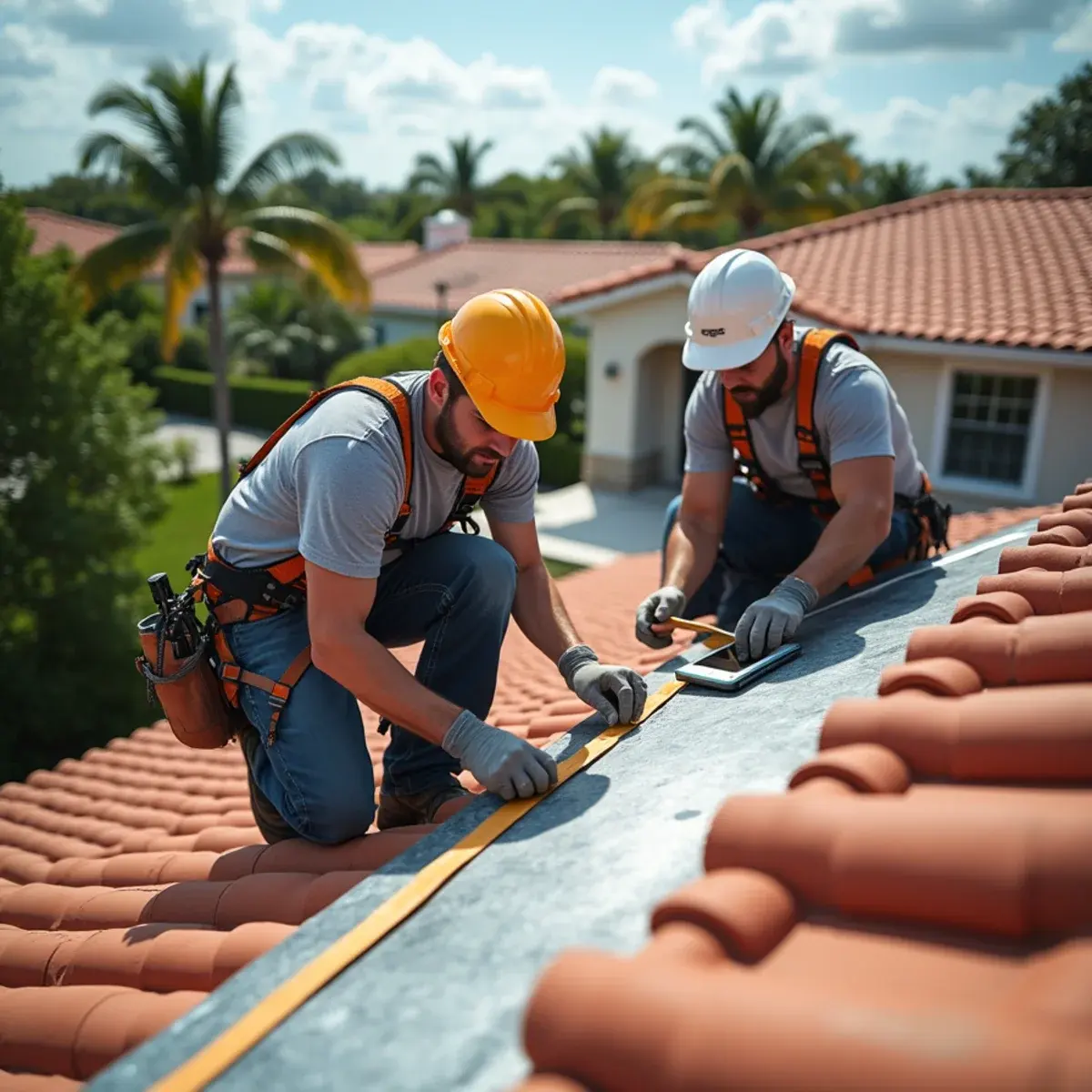
Ridge cap tiles being reset after loose mortar was removed on a Boca Raton tile roof
Valleys, flashing and the tile roof leak that keeps coming back
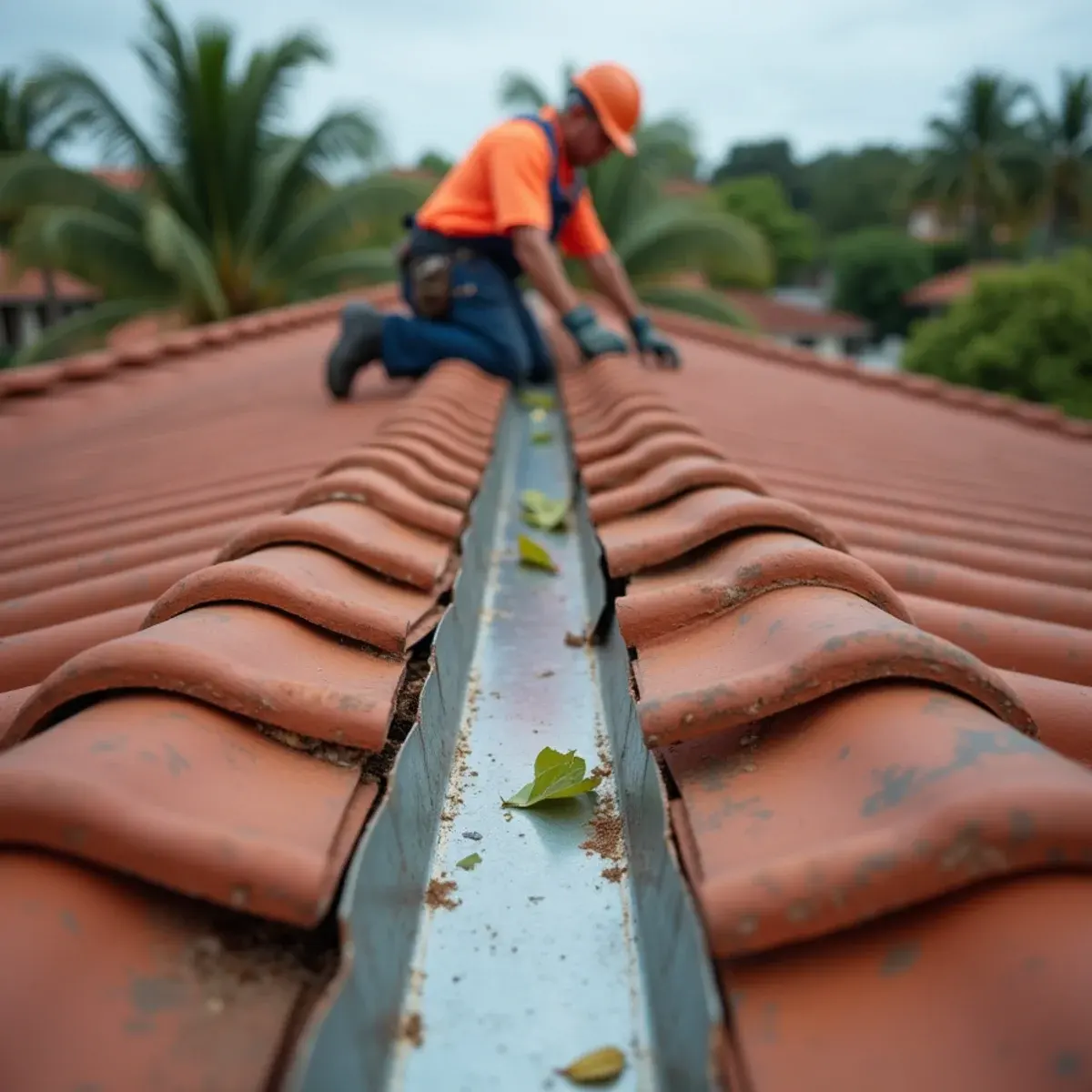
Valleys collect the water from two slopes, and flashing seals the places where the roof meets walls, chimneys, pipes and flat sections. When a ceiling stain appears, the water often entered several feet away along a valley or a wall flashing, not at the tile directly above the stain.
Valley metal: older galvanized valleys rust, especially near the coast. Debris and leaves in a valley hold water against the metal.
Wall and headwall flashing: stucco cracks and failed sealant let water behind the flashing.
Pipe and vent flashings: lead and rubber boots age out before the tile does.
Flat-to-tile tie-ins: the joint where a patio or garage flat roof meets the tile is one of the first places to wear.
If a tile roof has been "repaired" more than once in the same spot, ask for a fresh diagnosis instead of another tile swap. A roofer who lifts the tiles along the valley can see whether the metal or the underlayment is the real problem.
A ceiling stain shows where water became visible, not where it entered. A good roofer traces the path back up the roof: penetrations, valleys, wall transitions and counterflashing, then the underlayment itself. Many also check the ceiling and decking with a moisture meter so hidden wet areas get dried or replaced instead of covered up.
Tiles lifted along a roof valley to inspect rusted valley metal on a Boca Raton home
Matching tile in a Boca Raton HOA community
Matching is where tile roof repair in Boca Raton differs from most of the country. Associations expect replacement tile to match the profile, color and size of what is already on the roof, and many older concrete tile lines are no longer made.
How roofers handle a hard match
Identify the tile: concrete or clay, the profile (barrel, S-tile or flat), dimensions, and the manufacturer if a marking can be found on the back.
Check current stock: some profiles and colors are still produced or have close equivalents.
Salvage: good tiles can be taken from a less visible slope and replaced there with the closest new match, keeping the street side uniform.
Ask the association first: if a blend or a close match is the only option, get approval before materials are ordered.
When a match truly isn't possible and the damage is spread out, the decision may lean toward a tile roof replacement with a tile your HOA approves.
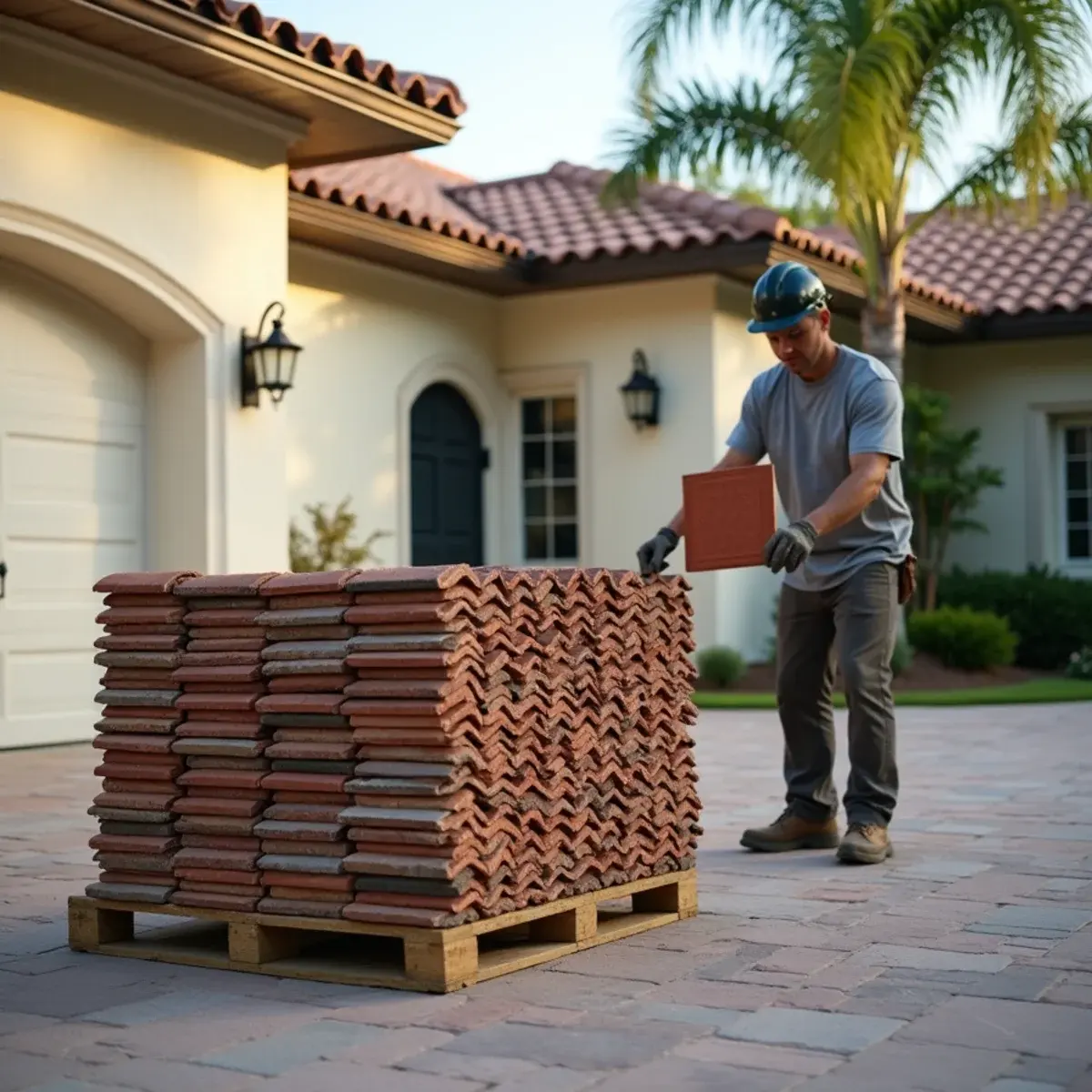
Salvaged original roof tiles sorted beside new sample tiles for an HOA color match in Boca Raton
What a tile roof inspection and repair includes
A tile roof repair should start as an investigation, not a sales visit. The roofer documents what is there, checks the layers that actually keep water out, and recommends the smallest repair that fixes the cause.
1. Safe documentation
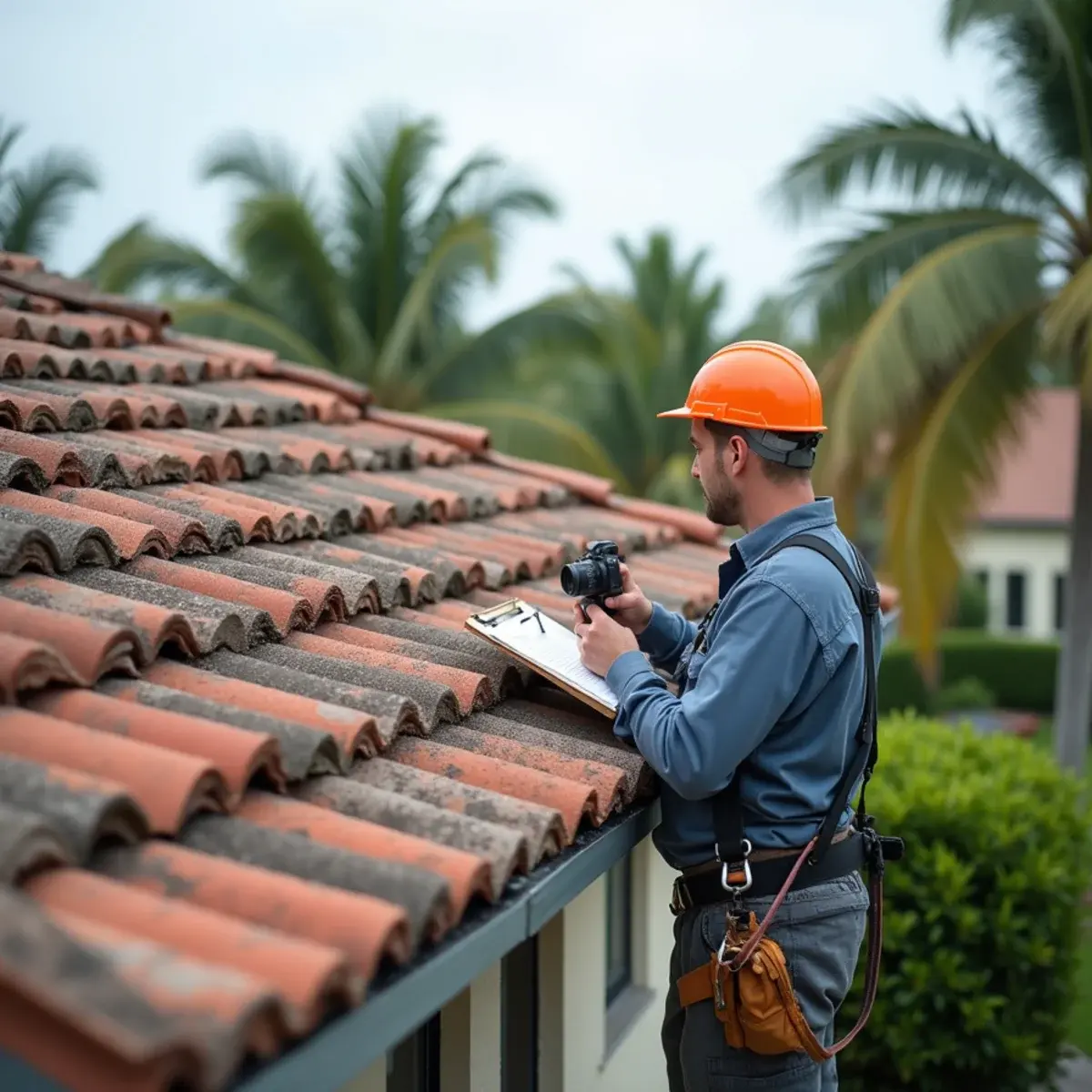
The roofer starts with what you have seen: where the stain is, when it appeared, recent weather and any earlier repairs. Then they photograph the roof plane, slipped or broken tiles, valleys, penetrations and visible flashing from safe access points.
2. Lifting tile where it matters
Some problems can only be seen under the tile. The roofer carefully lifts tiles in the suspect area to check the underlayment, battens where the roof has them, flashing and the decking, protecting the surrounding tiles so a small repair doesn't turn into breakage. Hidden damage gets photographed before anything is covered again.
3. A written scope before work
You get photos and a written scope that names the likely cause, the exact repair area, the tile matching plan, any underlayment or flashing work, who handles the permit, payment milestones, warranty terms and what is excluded.
4. Repair, cleanup and completion photos
After the work, you should see photos of what was done (including anything now hidden under tile), a clean yard and gutters, and a note of any inspection still pending.
A visual inspection can't reveal every concealed defect, and a good roofer will tell you which areas were checked and which weren't.
Repair, section repair or replacement: how the decision is made
The right scope depends on the documented condition of the roof, not on which job is bigger. Ask your roofer to show photos and explain the reasoning in writing.
Option
Usually fits when
Main risk
Ask about
Spot tile repair
A few broken or slipped tiles, sound underlayment around them
Fixing the visible tile while a valley or flashing keeps leaking
Matching, how tiles are set, what was seen underneath
Section repair (partial re-tiling)
One slope, valley or area is worn while the rest of the roof is sound
A weak tie-in where new work meets the old roof
Tie-in details, permit, product approval, how long the rest of the roof should last
Tile and underlayment are both worn, or repeated repairs keep failing
Paying for a new roof the condition didn't call for
Materials, permit, inspections, wind mitigation
A partial re-tile has to tie into the existing roof with compatible tile, underlayment and attachment, and it usually needs a permit. A full replacement recommendation should come with documented reasons, such as widespread underlayment failure, repeated repairs that didn't hold or hidden deck damage. Ask the roofer to separate what the roof's condition requires from what they would simply prefer to sell.
Florida's 25% rule can also change the answer. Since 2022, a roof built under the 2007 Florida Building Code or later can have just the damaged part repaired to current code, while an older roof may have to be brought up to code as a whole section. Our guide to repairing or replacing a tile roof walks through the decision step by step.
What drives the cost of a tile roof repair in Boca Raton
There is no honest flat price for a tile roof repair, because the same cracked tile can sit on sound underlayment or on a roof that is worn out underneath.
What moves the price
How many tiles are broken, and whether a matching tile is available or must be salvaged
Concrete or clay, and the tile profile
Roof height, pitch and access
What the roofer finds under the tile: underlayment, valley metal, flashing or deck damage
Ridge and hip lengths that need resetting
Permit, inspection, disposal and HOA requirements
We don't quote prices over the phone because a tile repair can't be priced from the ground. The roofer gives you a written, itemized price after the inspection, and nothing is done until you approve it.
How to compare written quotes
If you collect more than one quote (three is a sensible number when time allows), compare them line by line instead of picking the lowest total. Each one should show:
The exact repair area and the suspected cause of the problem
Tile material, profile, color, quantity and the matching plan
What happens to the underlayment, flashing, valleys and decking
Who pulls the permit and books the inspection
Labor, disposal and cleanup
The workmanship warranty and any manufacturer warranty
Payment milestones and what is excluded
A low tile-only price may not touch the real leak source. Also check whether each roofer actually looked under the tile or priced only the pieces visible from the ground, and avoid paying the full amount before the work, cleanup and any required inspection are done.
Permits, Florida Product Approval and wind uplift
Small tile repairs often don't need a permit, but work that replaces underlayment, re-attaches tile across an area or ties a new section into the roof usually does. The roofer we send confirms this with the City of Boca Raton (or Palm Beach County for addresses in unincorporated West Boca) and pulls the permit when one is required. Tile, underlayment and attachment methods need Florida Product Approval.
Florida Product Approval and NOA, in plain English
A Florida Product Approval, or a Miami-Dade Notice of Acceptance (NOA), is the paperwork showing that a specific roofing product, installed a specific way, meets Florida's wind and code requirements. It is not a decorative certificate: it ties the tile, the underlayment, the fasteners or foam adhesive and the attachment pattern together. Boca Raton is in Palm Beach County, outside the High-Velocity Hurricane Zone, while nearby Broward cities such as Deerfield Beach are inside it and follow stricter HVHZ approvals and inspections.
Wind uplift and attachment
How a tile is held down matters as much as the tile itself. Work is done to the current Florida Building Code (8th Edition, 2023) and the tile industry's high-wind installation manual published by the Florida Roofing and Sheet Metal Contractors Association (FRSA) and the Tile Roofing Institute (TRI). Ask your roofer which approval documents cover the products on your job and how the new tiles will be attached.
What to confirm before work starts
The roofer's exact Florida license number and business name.
The tile, underlayment, fasteners or adhesive, and the approval documents that apply.
Who pulls the permit and whether tie-in or uplift details are needed.
That the final inspection is passed before you make the final payment.
How to choose a Boca Raton tile roofing contractor
Every roofer we send is licensed and insured in Florida. You should still check, because the contractor who does the work is the one whose license, insurance and warranty protect you. We don't display a license number on this site because we aren't the contractor; the roofer is.
Check the paperwork
License: ask for the exact Florida DBPR license number and look it up on the state's official license lookup at myfloridalicense.com. The name on the license, the contract and the insurance certificate should match.
Insurance: ask for a current certificate of insurance.
Product approvals: for anything beyond a few tiles, ask which Florida Product Approval or NOA documents cover the materials.
Check the promises
Warranty: ask whether the workmanship warranty covers the leak source or only the replaced tiles, how long it lasts and what it excludes. The manufacturer's warranty is separate.
Payment: milestones should follow documented progress. Avoid paying everything up front.
Proof: dated photos of similar Boca Raton tile jobs say more than a long list of neighborhoods or a star rating alone.
How it works
From your call to a finished repair
1
Call us, day or night
Tell us what you're seeing, the roof type, its rough age and whether an HOA is involved. We answer 24/7.
2
We send a local roofer
We match you with an independent roofer who works your area and knows concrete and clay tile.
3
Inspection and a written price
The roofer looks under the tile, shows you photos, and prices the repair in writing before any work.
4
The repair gets done
Matched tile, permit if needed, cleanup and photos of the finished work. Warranty terms come from the roofer.
Why choose us
Honest tile roof advice from people who know Boca Raton
Boca Tile Roof Repair connects you with independent licensed roofing contractors who perform the work.
HOA-matched tile repair, flat condo roofs and HVHZ-compliant reroofs.
Broward County · 20 to 25 minutes from Boca Raton · HVHZ
Boca Raton neighborhoods we cover
Roofers we send work across Boca Raton, from the older clay-tile streets near downtown to the gated concrete-tile communities out west. Timing, roof access, HOA rules and tile availability vary by property, so we confirm your address on the call.
A tile roof price in Boca Raton depends on size, pitch, tile type, underlayment, deck repairs, permits and HOA rules. Learn what moves the number and how to compare estimates.
Florida Statute 627.7011 limits when insurers can refuse a policy over roof age. Here is what the 15-year rule says, the inspections involved and how to plan your next roof.
Florida's 25% roof rule changed in 2022. Here is how it works today, what counts as a roof section, and when a repair on an older roof turns into a full reroof.
Read the guide
Tile roof repair questions from Boca Raton homeowners
Can you replace only one cracked roof tile?
Yes, a single cracked tile can often be replaced on its own. The roofer should check the tiles around it and the underlayment underneath, and find a matching tile or salvage one from a hidden slope. If the underlayment below is brittle or torn, a one-tile fix won't last, and the roofer should tell you that before you pay for it.
How do I know if the problem is the tile or the underlayment?
You usually can't tell from the ground. Stains that appear far from any broken tile, repeat problems in the same spot, or a roof that is 20 years old or more all point to the underlayment. A roofer lifts a few tiles in the problem area and shows you photos of what is underneath.
Can discontinued roof tile be matched for my HOA?
Often, but an exact match isn't guaranteed. The roofer identifies the material, profile, size and color, checks current stock and close equivalents, and can salvage tiles from a less visible slope. If only a close match is possible, get your association's approval before materials are ordered.
Does a tile roof repair need a permit in Boca Raton?
It depends on the scope. Replacing a few tiles often doesn't, while replacing underlayment, re-attaching tile across an area or tying in a new section usually does. The roofer confirms the requirement with the City of Boca Raton or Palm Beach County and pulls the permit when one is needed.
Should I repair or replace my tile roof?
Repair when the damage is limited and the underlayment around it is sound. Consider a lift and relay when the tiles are fine but the underlayment is near the end of its 20 to 30 years. Replacement fits when both are worn or repairs keep failing. Ask for photos and written reasons.
Is it safe to walk on my tile roof to look at the damage?
No. Concrete and clay tiles crack under foot traffic, and tile is slippery, especially when wet. Take photos from the ground or a window and let the roofer do the roof-level inspection. Walking on the roof often turns one broken tile into several.
How much does tile roof repair cost in Boca Raton?
It depends on what is under the tile. The price moves with the number of broken tiles, concrete or clay, whether a match is available, roof height and pitch, and what the roofer finds in the underlayment, valleys and flashing, plus any permit and HOA requirements. The roofer gives you a written, itemized price after the inspection and nothing is done until you approve it.
Why can a small cracked tile cause a big roof leak?
Because the tile is the outer shield, not the waterproofing. A crack lets sun and wind-driven rain reach the underlayment, and water can travel along the underlayment, battens or a valley for several feet before it shows as a ceiling stain. The crack you can see may be near the entry point or only one part of the problem.
How long does a tile roof repair take?
Replacing a few tiles or resetting a section of ridge is often done in a single visit. Work that needs a permit, a special-order or salvaged tile match, or HOA approval takes longer because of that paperwork and lead time. The roofer gives you a realistic schedule with the written scope.
What are Florida Product Approval and NOA documents?
They are the records showing that a specific roofing product, installed a specific way, meets Florida's wind and code requirements. A Florida Product Approval or a Miami-Dade Notice of Acceptance ties together the tile, underlayment, fasteners or adhesive and the attachment method. Ask your roofer which documents apply to your repair.
How do I verify a Boca Raton roofing contractor?
Ask for the exact Florida DBPR license number and look it up on myfloridalicense.com, and check that the name matches the contract and the insurance certificate. Ask for proof of insurance, the product approval documents for the materials, written warranty terms and an itemized quote that says who handles the permit, cleanup and final inspection.
How quickly should wet materials from a roof leak be dried?
EPA guidance is to dry water-damaged materials within 24 to 48 hours to reduce the chance of mold. Protect the room, ventilate it and start drying right away, and ask whether wet insulation or drywall needs professional drying or replacement. A drip that has stopped does not mean the materials are dry.
Does homeowners insurance cover tile roof damage?
That depends on your policy, the cause of the damage and its exclusions, and only your insurer can decide. We don't interpret policies. What helps in any case is a clear record: dated photos, the roofer's inspection notes, an itemized estimate and your receipts, kept together in one place.
Contact
Call a Boca Raton tile roofer
We serve homes across Boca Raton and nearby cities without a walk-in office, so the fastest way to reach us is the phone. Every roofer we send is licensed and insured in Florida.
Boca Tile Roof RepairServing Boca Raton, FL 33432 and nearby areas(773) 207-0769Open 24 hours, 7 days a week
Estimates and non-urgent requests
Not urgent? Send a request
For the fastest help, call (773) 207-0769. Phones are answered 24 hours a day, 7 days a week.
Use the form for estimates, second opinions and questions that can wait for a callback. Every roofer we send is licensed and insured in Florida.
Boca Tile Roof RepairServing Boca Raton, FL 33432 and nearby areas(773) 207-0769Open 24 hours, 7 days a week